|
|
Moss Treatment and Control Advice Page Updated 4 / 2023 |
|---|
|
|
Moss Treatment and Control Advice Page Updated 4 / 2023 |
|---|
.
|
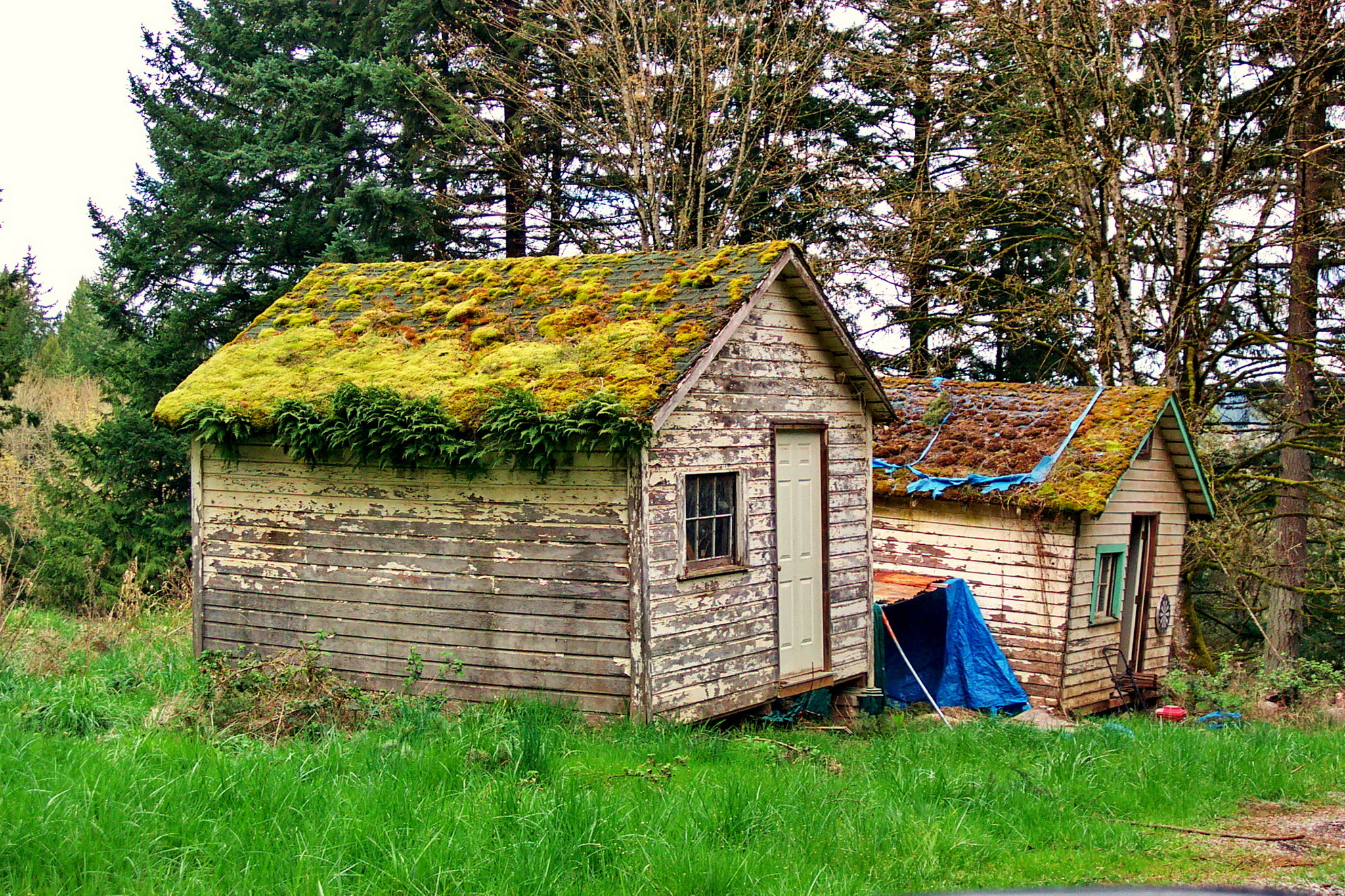
I imagine we've all seen quaint looking roofs like this covered in thick layers of moss. That shed roof was let go so long it had ferns growing along the bottom edge within the heavy blankets of moss where most of the rain water would settle and feed off the decomposing wood under the shingles. I can see the shed behind it had been covered up with a blue tarp to prevent leaks, but had suffered enough Sun and wind damage to shred it. Epecially here in the Great Northwest moss build-up on roofs is a common unsightly problem, and a potential danger to any one needing to get up on the roof. It will shorten the life-span of your roof, but often removal can cause more damage than the moss left there to spread. Here's some advice you can consider to prevent and or clean your roof w/o causing more damage than the moss would cause leaving it there. Using a pressure-washer is a common mistake Contractors make all too often, since it is the quick easy way to clean a roof. Also, beware of them using any chemicals or powders, which can be poisinous to the ground soil, critters, pets, and you. They can also destroy expensive copper gutters, and you would be hard-pressed to get them to take any responsibility for that damage. Very few contractors are trained and licesed to handle those moss killing powders and chemicals, since they would need to be a certifide Pesticide Control Specialist, as they are highly poisionous. If you are not able to do this cleaning work yourself and you happen to live in the Portland, Oregon Metro Area you can call me to help, but I have commonly been booked up with jobs over a year out. I did not write this page to sell this type of work. I have more than enough work replacing gutters and the custom copper fabrications I do. This is just intened as friendly advice. |
|
What causes so much moss growth on roofs here in the N. W.? |
|
Fungal spores are tiny and will travel great distances through the wind, so there's no way to avoid it. As with any living thing moss needs moisture to survive, so you may have noticed most of the moss build-up on roofs is seen on the North facing roof sides and where there are shade trees near the house. Thick layers of moss will trap moisture like a sponge for a long time. Although, the South facing roofs surfaces get much more Sun exposure, so it dries out the beginning moss growth, so it gets much less chance to thrive. Moss is found on the Northern sides and areas with shade trees near by, which drop other debris on the roof and drip sap. Moss needs to feed on the decomposing tree debris that gets trapped on roofs, which is another reason you will see a lot more moss on the roof under an overhanging tree that has littered the roof with it's fall-out. If you take the time to look around the City you will see a direct correlation on roofs in your area. |
|
Why is moss bad for roofs? |
|
I've heard people jokingly say the moss is the only thing holding their roof together. It is true that the harsh UV rays of the Sun is actually one of the main causes of aging roof covers, so some people think it's actually helps to have a heavy layer of moss on their roof to shield it from exposure to the elements. Moss growth is clearly more detrimental than it could help on most any surface. It is one of nature’s ways to help recycle and break things down back to the earth. The rock granuals on asphault shingles is there to shade the petrolium material from the Sun, but most metal roofs are steel and only have a thin layer of paint that has no lasting protection from the Sun, but we tend to see more mildew stans on painted surfaces. Wood shakes and tile roofs will tend to support a lot of moss growth as well. It may look charming to walk through a forest with huge draping coverage of moss on tree trunks and branches, but that is more of a sign of an unhealthy forest, and the best reasons for forest fires to cleanse that forest of those fungal infestations. The Forestry Department have begun to realize how they've done more harm than good to fight forest fires over the last century by not allowing the natural sterilization and thinning of diseased trees to take place. Moss will attack sick trees. In more extreme cases you will even see ferns growing in the thick moss growth up in the tree branches, and even on roofs that were left too long this way, as seen above. So, in general moss is a sign of there being something very wrong. Very dirty if nothing else and mildew spores flying off in the wind, that we breath in. Besides this is the fact how a slippery moss build-up can make it quite dangerous for you or a worker to access your roof for necessary maintenance. Even a minor coat of mildew on a wood shake or metal roof will make it slick, like a water slide with the slightes moisture, like the morning dew. |
|
How does moss damage composite shingles? |
|
Mother Nature works hard to recycle everything it can in several different ways. Not only through breaking it down with the Sun's UV rays, but also with corrosive oxidization, and bacterial decomposition, as well as erosion. The tiny roots of the moss dig into the roofing shingle surface and loosen the sand to lift it off the petroleum material under it. They also work up under the overlapping shingles, splitting them apart and syphon rain water into places it is not meant to be and attacking to the shingles from undeneath as well as the top surfaces. Moss will also hold moisture against the shingles and flashing like a sponge for weeks after it had stopped raining, causing the bacteria growth to rage and decompose your roof cover. Asphalt shingles are very resistant to this sort of decay, but everything has limits and eventually will cause leaks. Heavy moss growth can eat up 5 to 10 years life span from your roof if left untreated, yet in many cases cleaning the roof can cause more damage than the moss if done the fast easy way with a strong pressure washer. So let me be perfectly clear on this issue: Never let anyone get up on your roof with a pressure washer to clean off your roof! I'll explain why below.
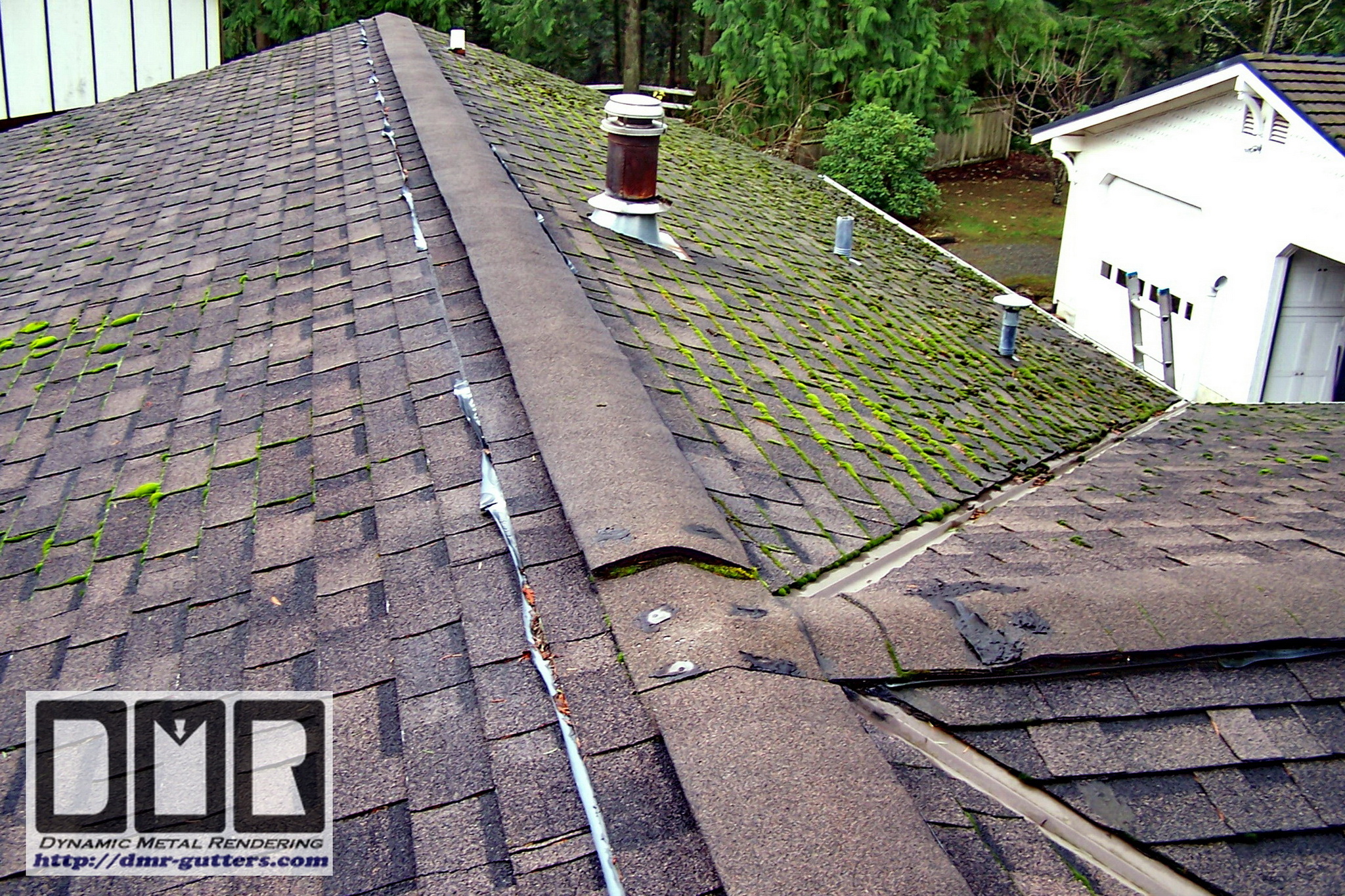
Same roof before and after Client installed our metal parts when reroofing The steel flashing is actually at greater risk
than the shingles. It is common to see roof valleys
build-up with debris from several years of trees littering their
loads, until it has plants growing in that decompose soil on your
roof. Moisture is held in suspension,
causing that debris to decompose into mud under the dry surface debris you
can see on top. Roof valleys and other metal flashing areas are the #1 source of
roof failure and leaks after they have rusted out, given 95% of roof
flashing is just cheap painted steel. Think about how few cars will
last more than 2 deades before the paint has been compromised, yet
they have a far better painted surface than steel roof flashing. Are
you going to hire a detailer to wash and wax your roof flashing
every 6 months? I think not. |
|
What is the worst way to clean a roof, and must be avoided? |
|
A Pressure Washer
is Deadly to Most Roofing Materials Normal house-hold water pressure is around 150
psi (pounds per square inch pressure) or less. The problem with
pressure washers is how they are designed to deliver 3,000 to 4,000
psi concentrated into a narrow blast, which will dislodge a
good 30% of the sand off your shingles. That sand is there to shade
the petroleum material of those shingles from the attack of
the corrosive UV rays of the Sun. Pretty much any roofing material is not designed to
withstand more than a 100 mph wind storm, yet that high pressured water
blast would certainly simulate a great deal more and it will
force water into places that can cause a good deal of water damage to
your home. |
|
What are other common ways to clean a roof? |
|
Bleach Detergent Powder Moss Treatment Many people think it is the mild detergent in this powder that kills the moss, so they think they can just sprinkle laundry detergent on their roof, but it is actually the zinc phosphate that does the trick. Zinc is an inexpensive anti-fungal metal, compared to copper. As long as you do not have copper gutters it is an effective and inexpensive way to control the moss growth, which is commonly sold at your local hardware stores, but there are serious problems, which are not so obvious. I had thought this was a good idea until I was informed by a State Agency that I was not allowed to offer this service on my web site without being licensed as a pesticide control expert. In stead of acquiring the right certification I decided to see this as a warning to not handle such toxic materials. This shows how that is a very dangerous product to use, so it is very strange how it is so widely sold to unsuspecting Homeowners to use without protection. If you are brave enough to risk it you should wet down the roof just before sprinkling on that powder. This help keep the powder from getting blown off the roof into your yard and into the lungs of your pets and children. Wind of just a light breeze will blow off a lot of that powder well before it had a chance to work it's death magic. Be very carefeful to make sure you do not breath any of it in as well, so a face mask is strongly advised for you and anyone else in close proximity. You may want to very lightly wet the roof again right after applying it to help keep it in place and spread it around, but not too much or you will just be washing the powder off your roof and down into your gutters. And then into your ground soil from there without gaining much benefit of sterilizing your roof, and just sterilizing your soil. Several different companies make those powders. I don't think it matters much which brand you use. It should only take a half hour to treat a low slope roof on typical houses, but a steep roof over 6/12 pitch may be too dangerous for a Homeowner to attempt. They are easy to apply if your roof is not steep, but it will not remove the moss build-up either. Depending on how much tree coverage you have near your house it has to be re-applied frequently. Long term this could be more costly than the one time expense of a copper ridge cap, than to hire a licenses Pesticide Contractors to apply this to your roof over the next decade+. Although, on the plus side after it washes off your roof and sterilizes the ground soil, killing all the trees near your house you will wind up with much less of a moss problem in the future. As long as those dead trees are removed, and do not fall onto your house. Another concern is to not to use that type of powder on a roof that has copper gutters. I have personally seen evidence of a chemical reaction that dissolved holes through the floor of the copper gutters. It will turn the inside of the copper gutters to a hot pink color if it is causing that sort of adverse reaction. The only viable option for roofs with copper gutters is to have copper ridge and hip covers installed if you want to prevent moss growth. I have not seen a powder like product made with copper in it in stead of the cheaper zincoxcide. Zinc Metal
Strips
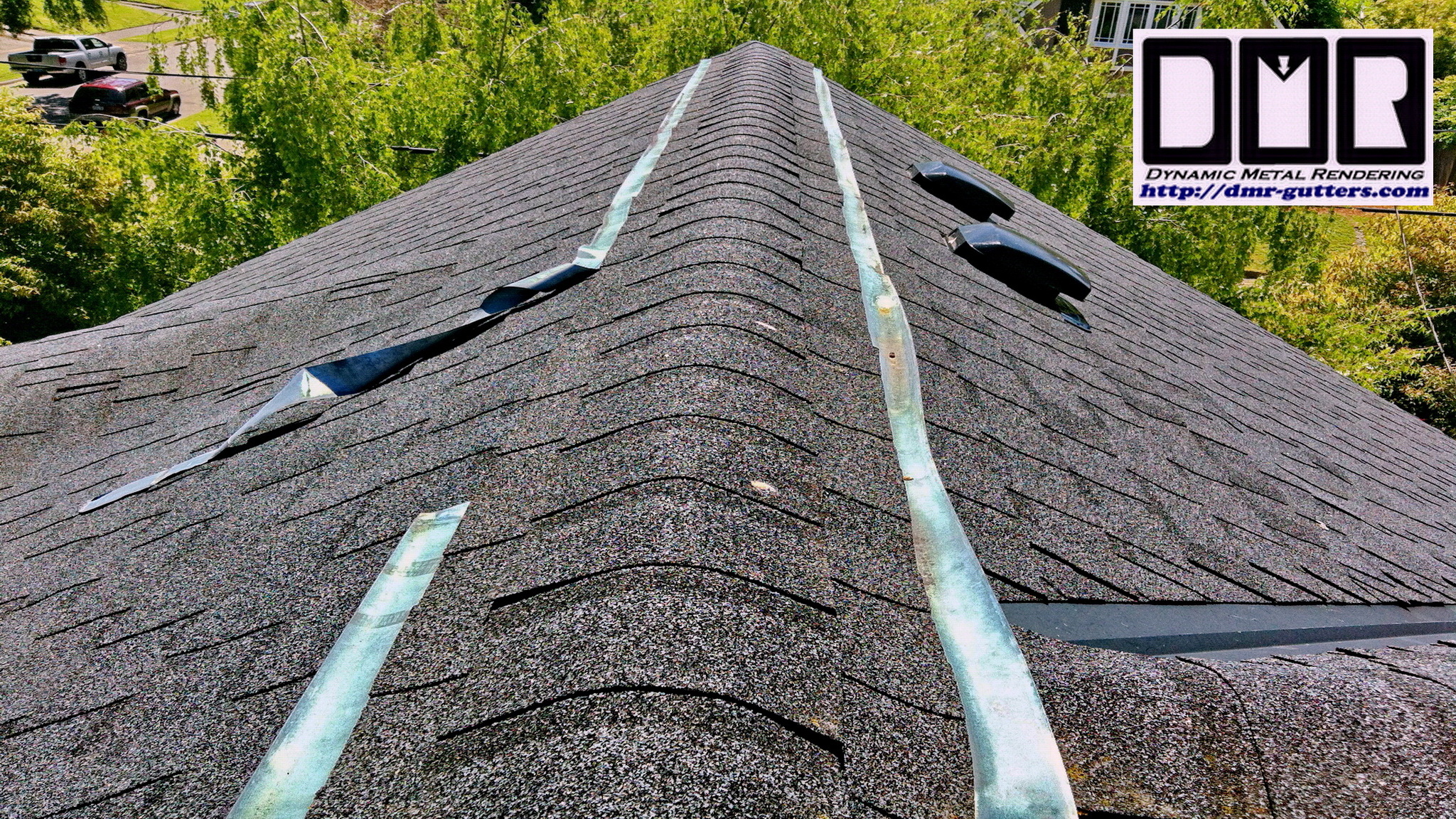
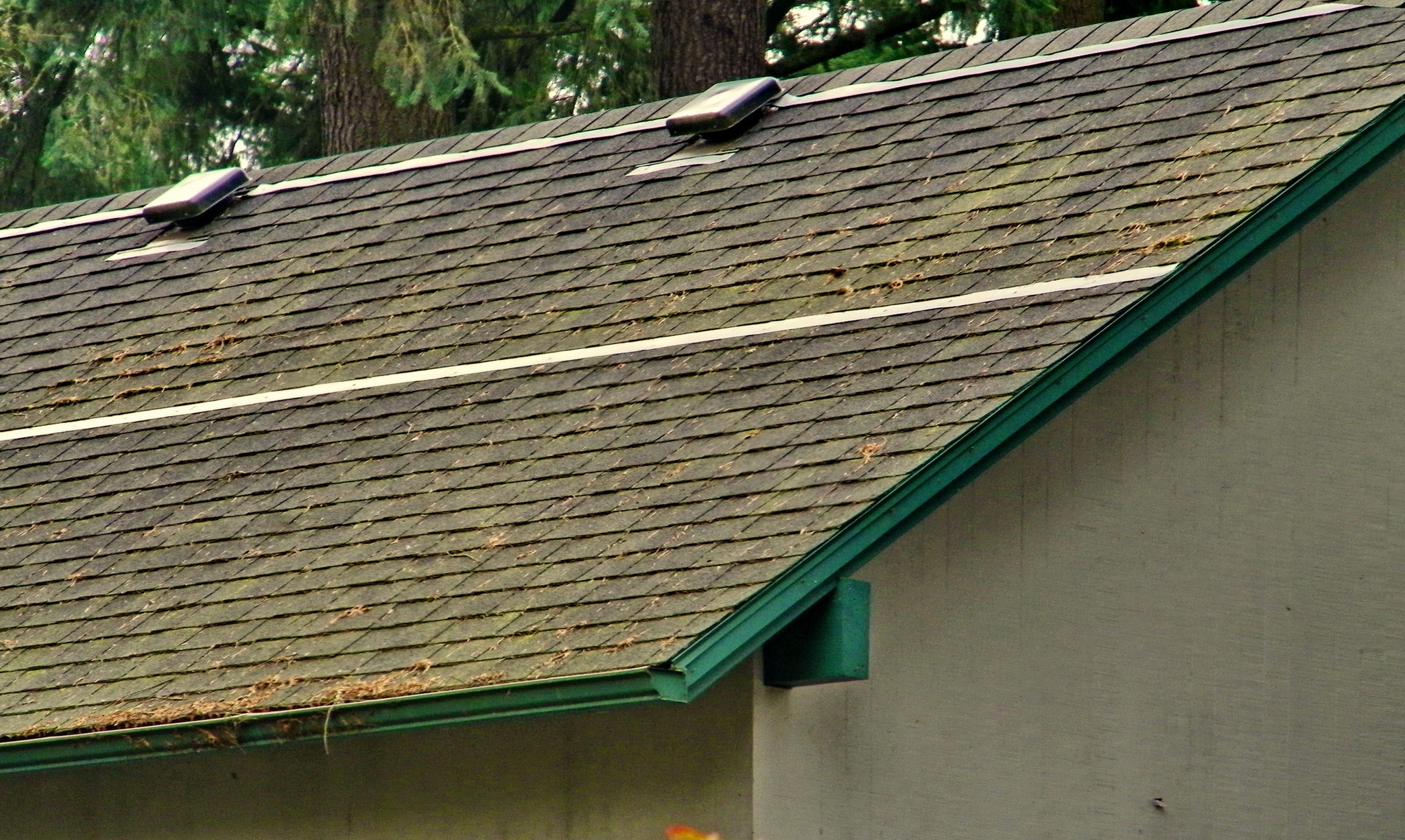
Another problem with those zinc strips is how they would curl up and troth water within a couple years like a tape measure blade. This is because most installations are done upside down. They will dip in a few places where you will see clean streaks down the roof below where those dip points are, but that makes the roof look even more noticeably messy with such uneven clean streaks. Here's a couple shots I took of a house where they had attached a top and mid strip of zinc on their roof. If you click on these pictures to see them larger you can see better how they were still not effective enough to keep the moss from forming on the roof. Perhaps it looks even worse now. Besides the look of that mid strip; they now have those irregular streaks you can see where the roof is clear of moss.
Also, this zinc is not able to remove the moss that is there. Being such a soft metal zinc is no good as a ridge cap, but a zinc galvanized steel sheet metal can be used effectively for a temporary solution, but you will need to make sure it gets replaced before it starts to rust, or you will have unsightly rust stains on your roof. See below for how to safely remove moss off roofs. |
| What is a long term low maintenance solution? |
|
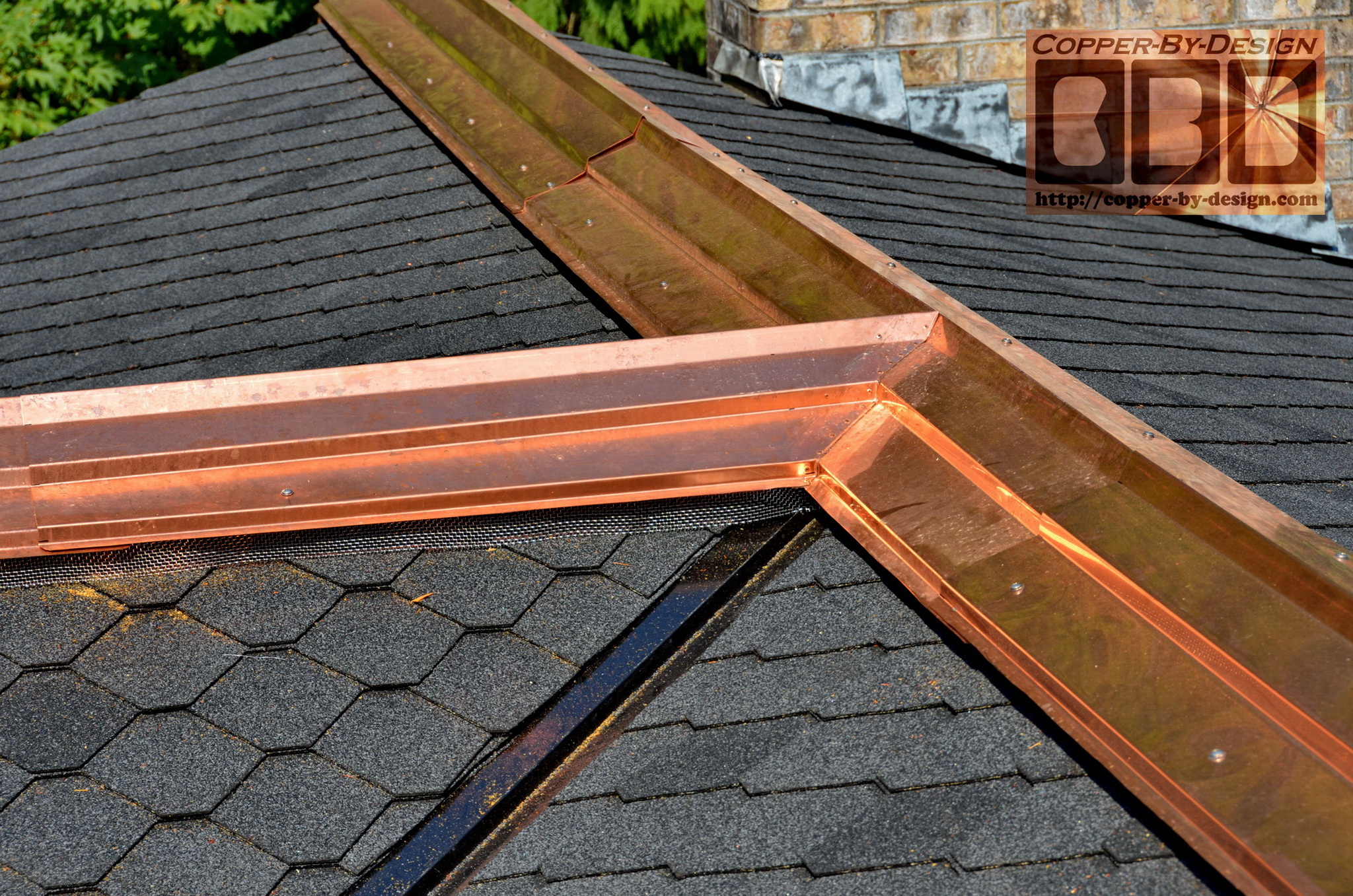
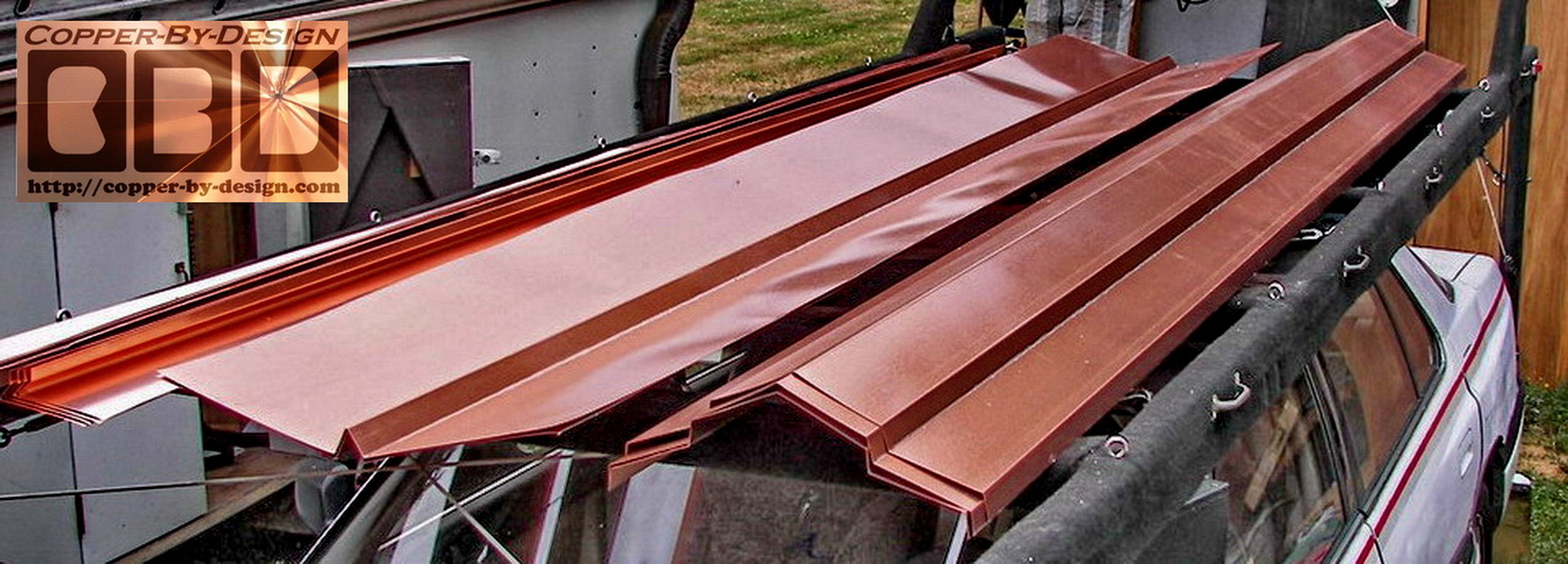
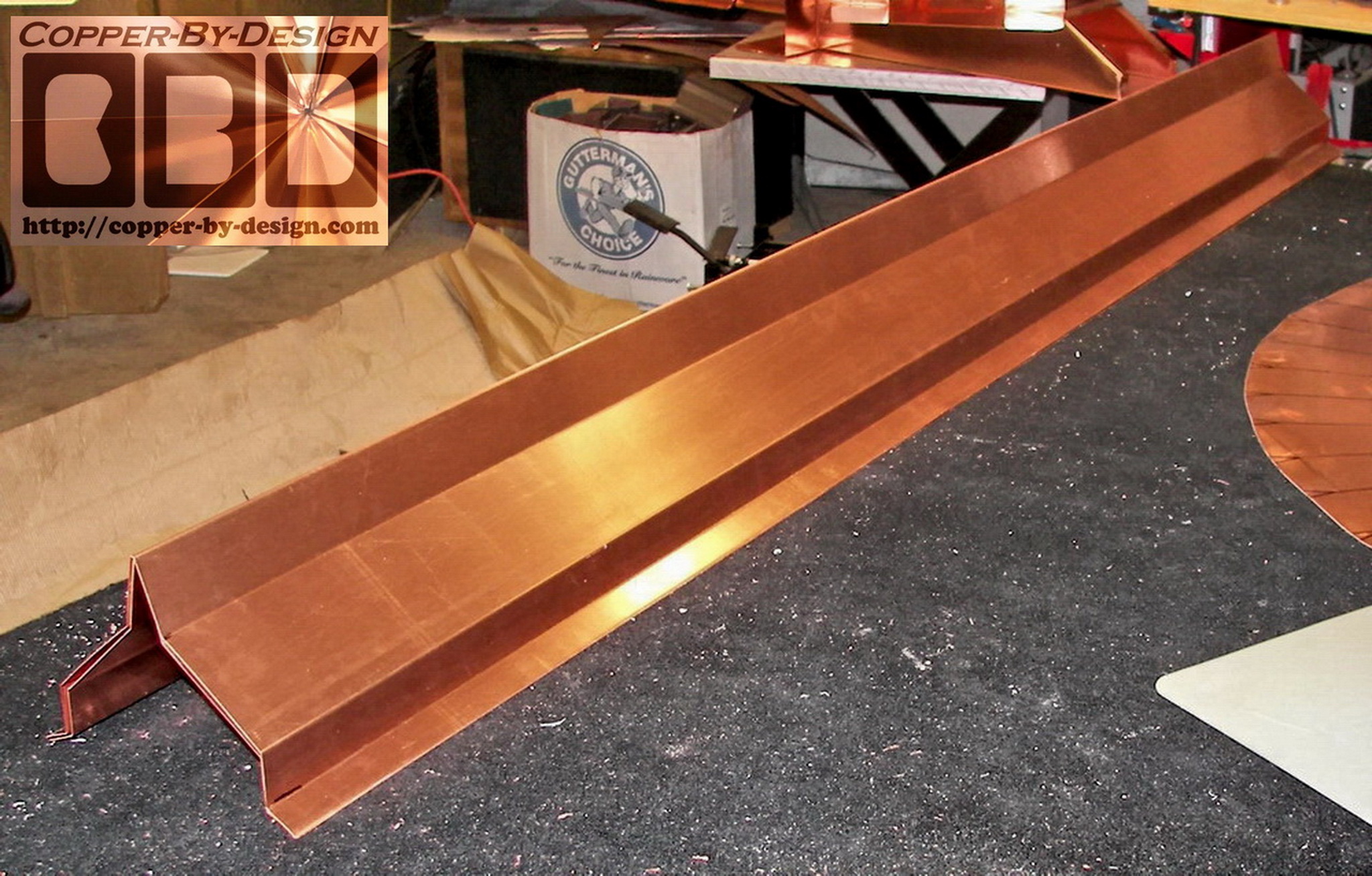
A Copper Hip and Ridge Cap w/other Copper Roof Flashing This shows copper roof flashing kits that range from drip-edge, T-edge metal, W-valley, and ridge caps bent in solid 20oz copper sheet w/stainless steel fasteners or copper nails for as little as $10 sq' + crate and delivery charges if needed. Although, small quantities can run as much as $15 to $20 sq'; like a custom chimney flashing kit.
I
realize copper is a bit more costly initial investment,
but if you have copper gutters this may be your only option for
a lasting trouble free solution to moss growth, since most, if not
all other roof treatments can harm copper gutters. These copper
ridge caps can be re-used over again when re-roofing
is required; making it a one time purchase.
A copper ridge cap would also increase the resale value of your house
more than the cost difference, and is an excellent option
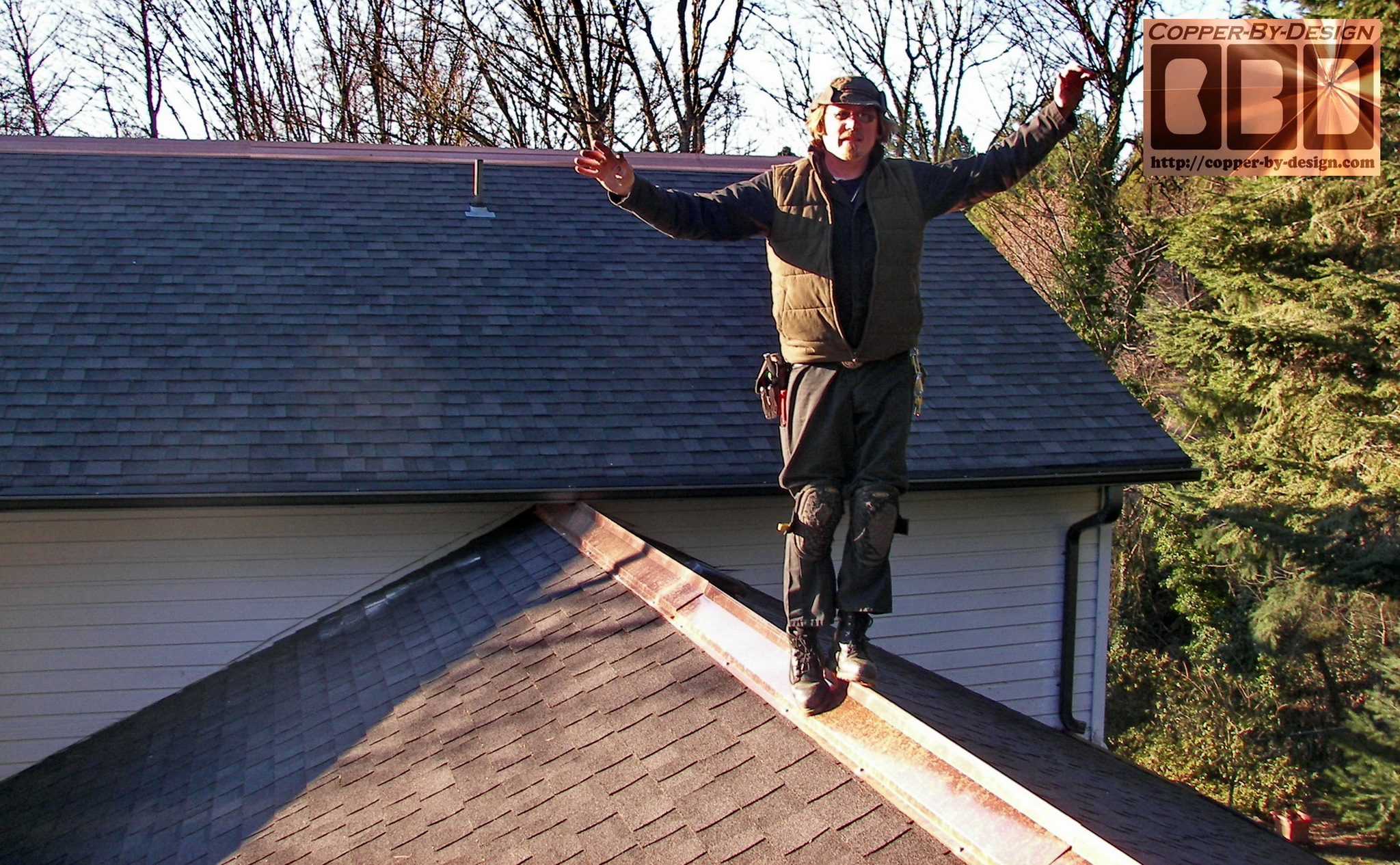
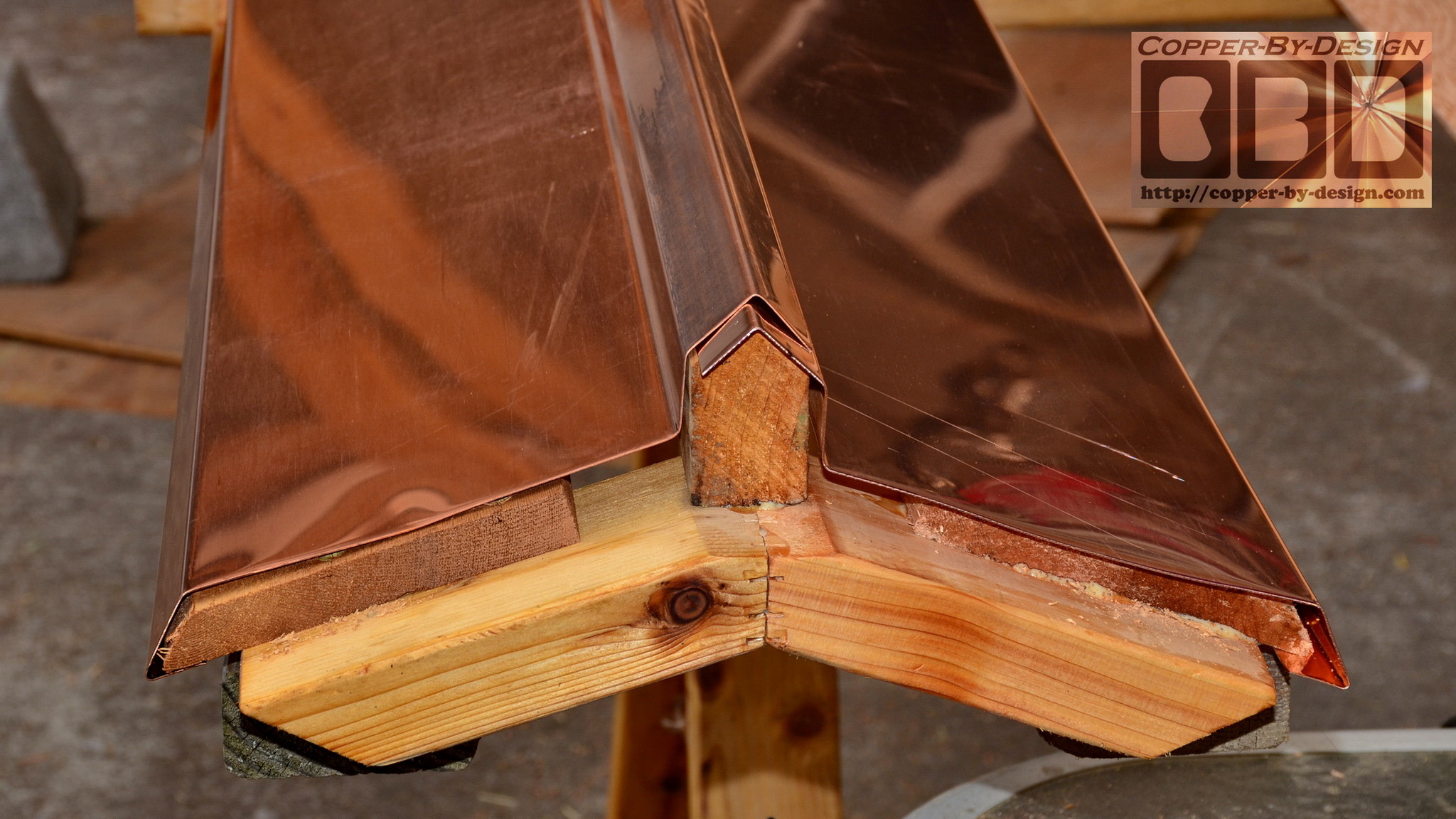
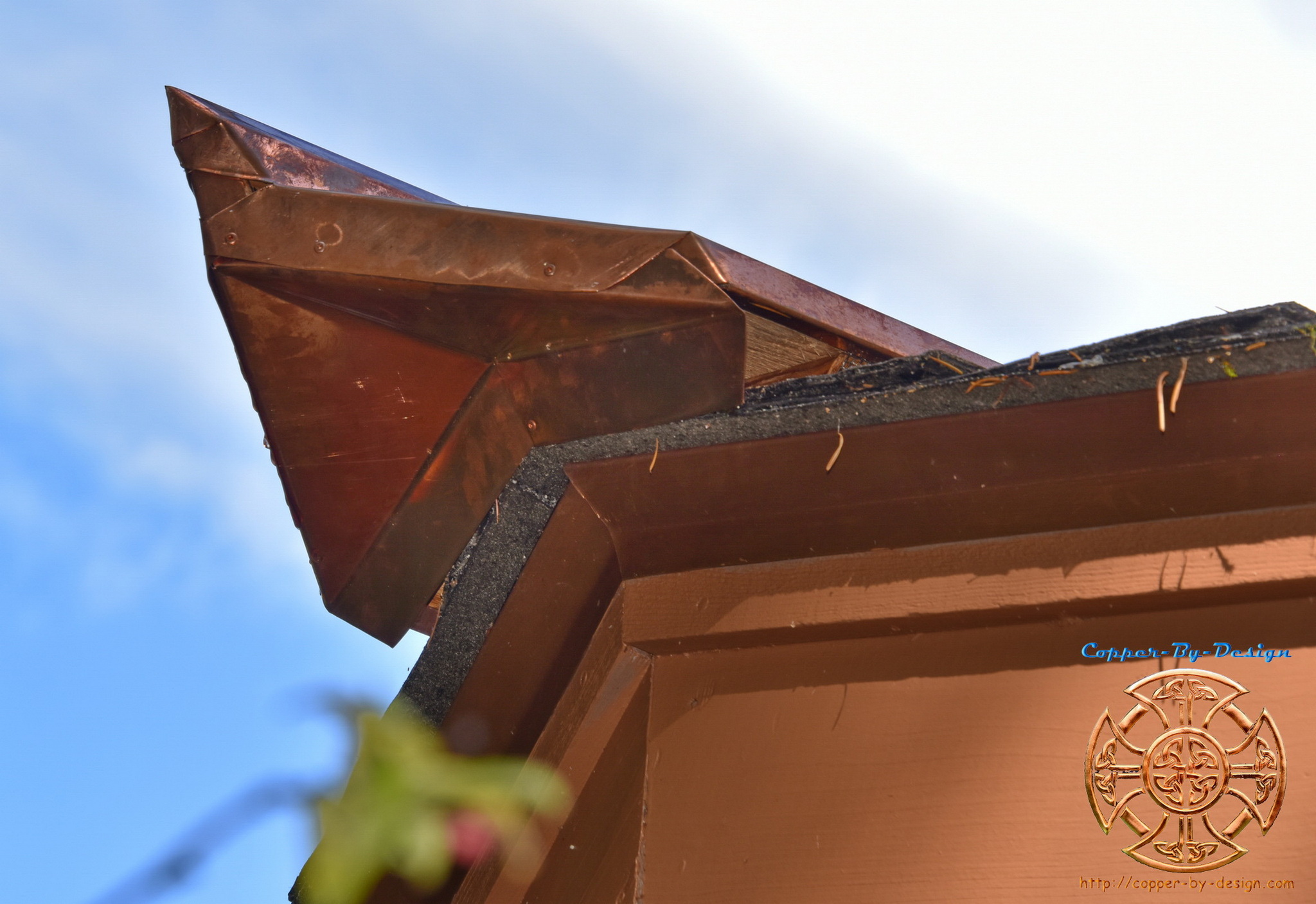
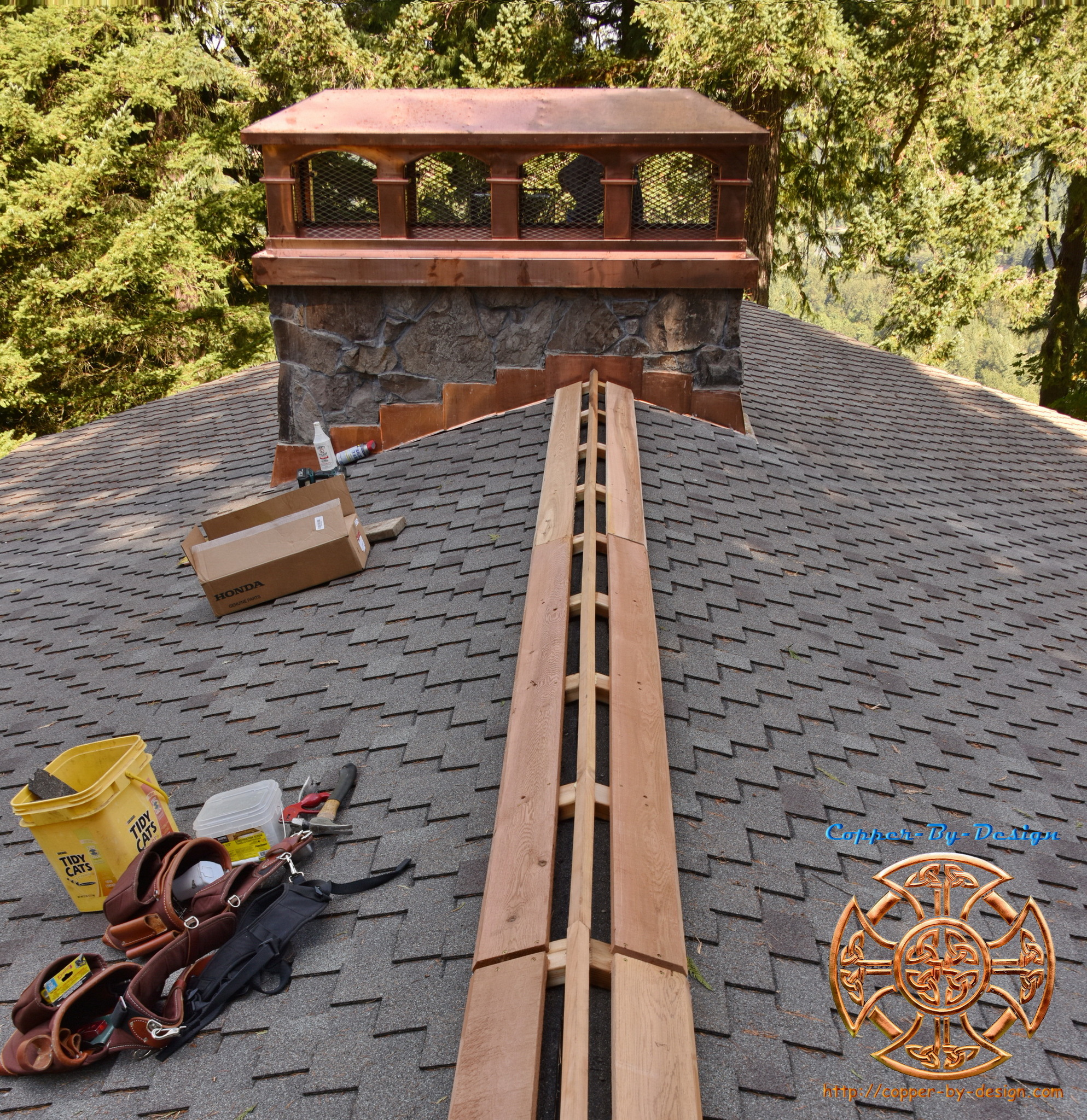
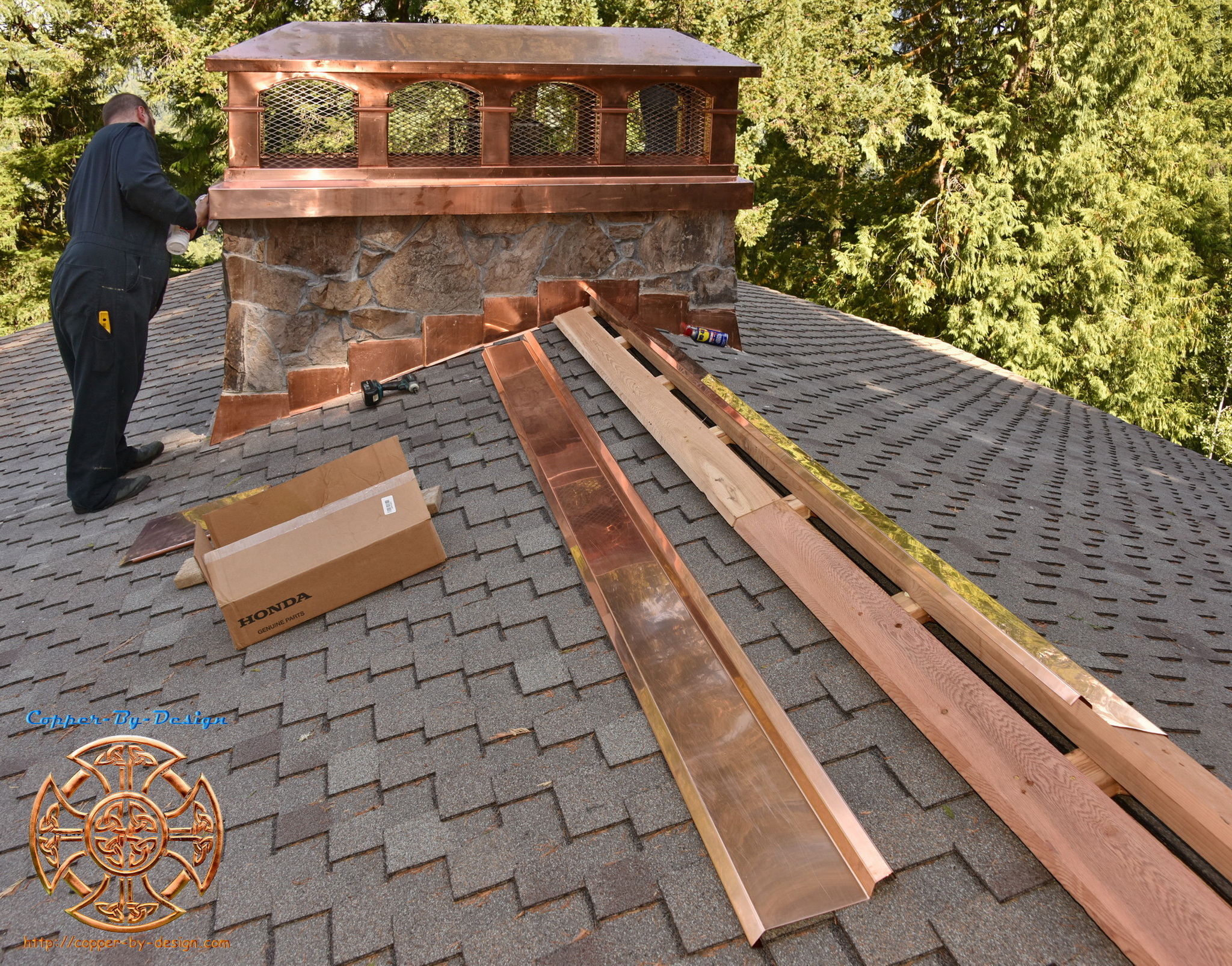
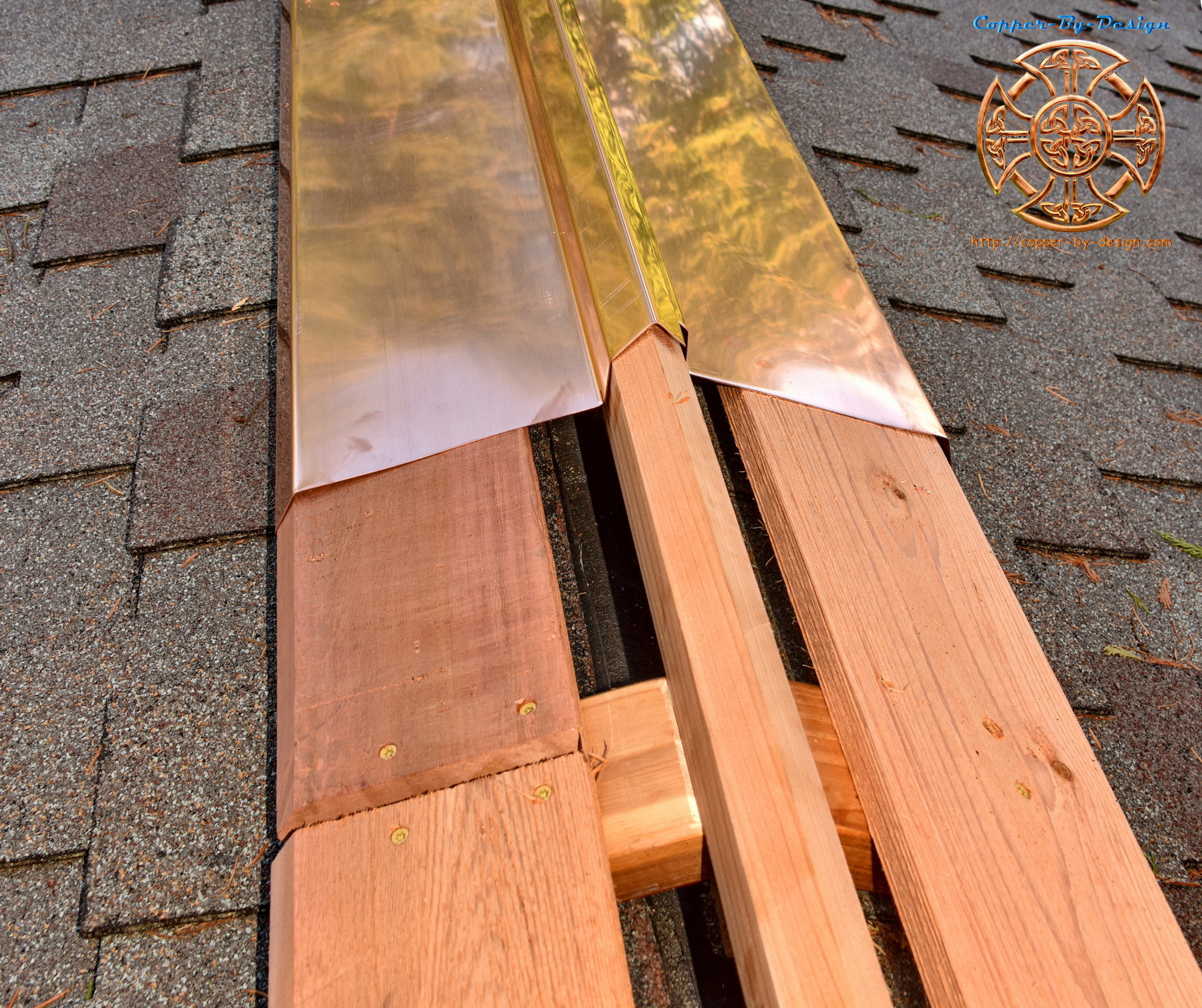
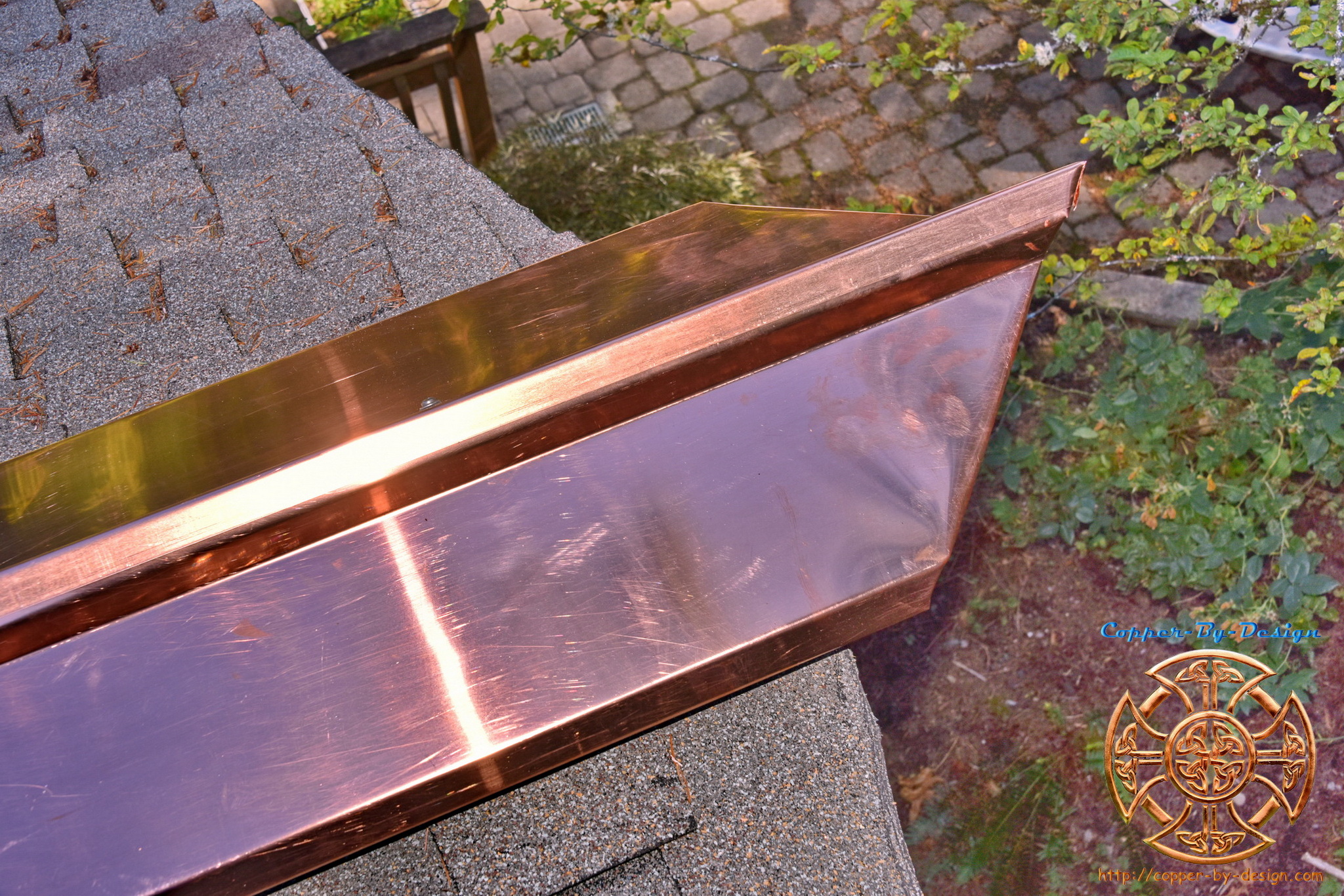
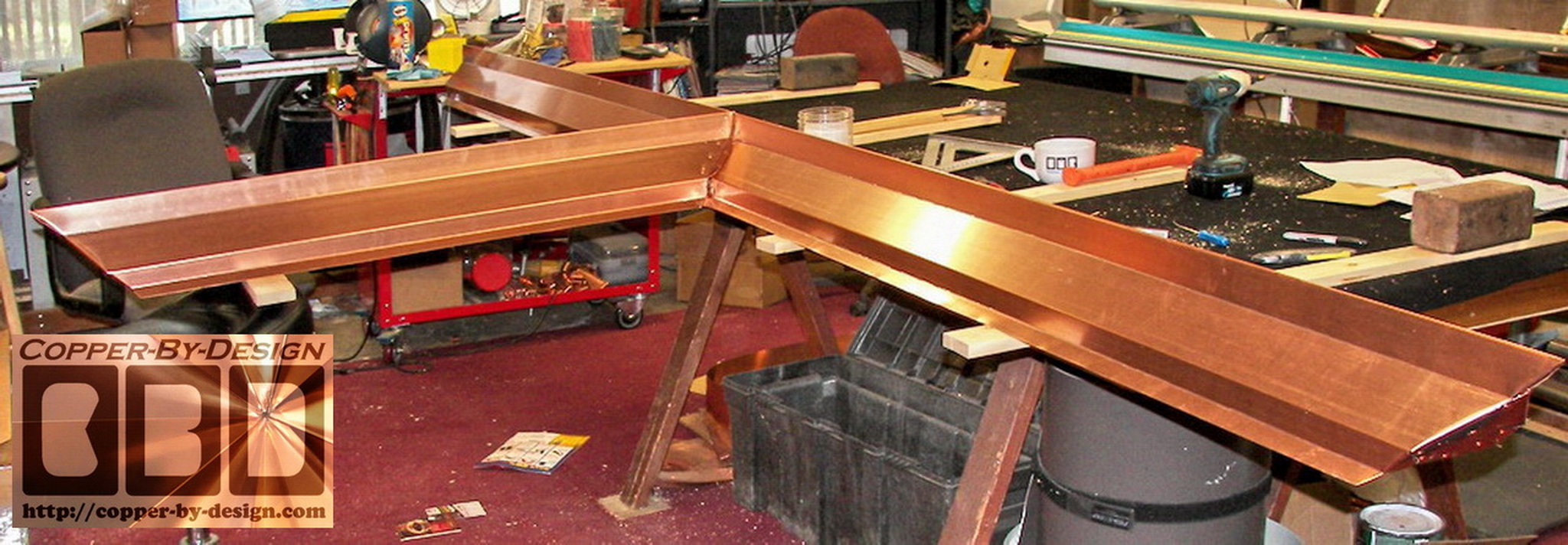
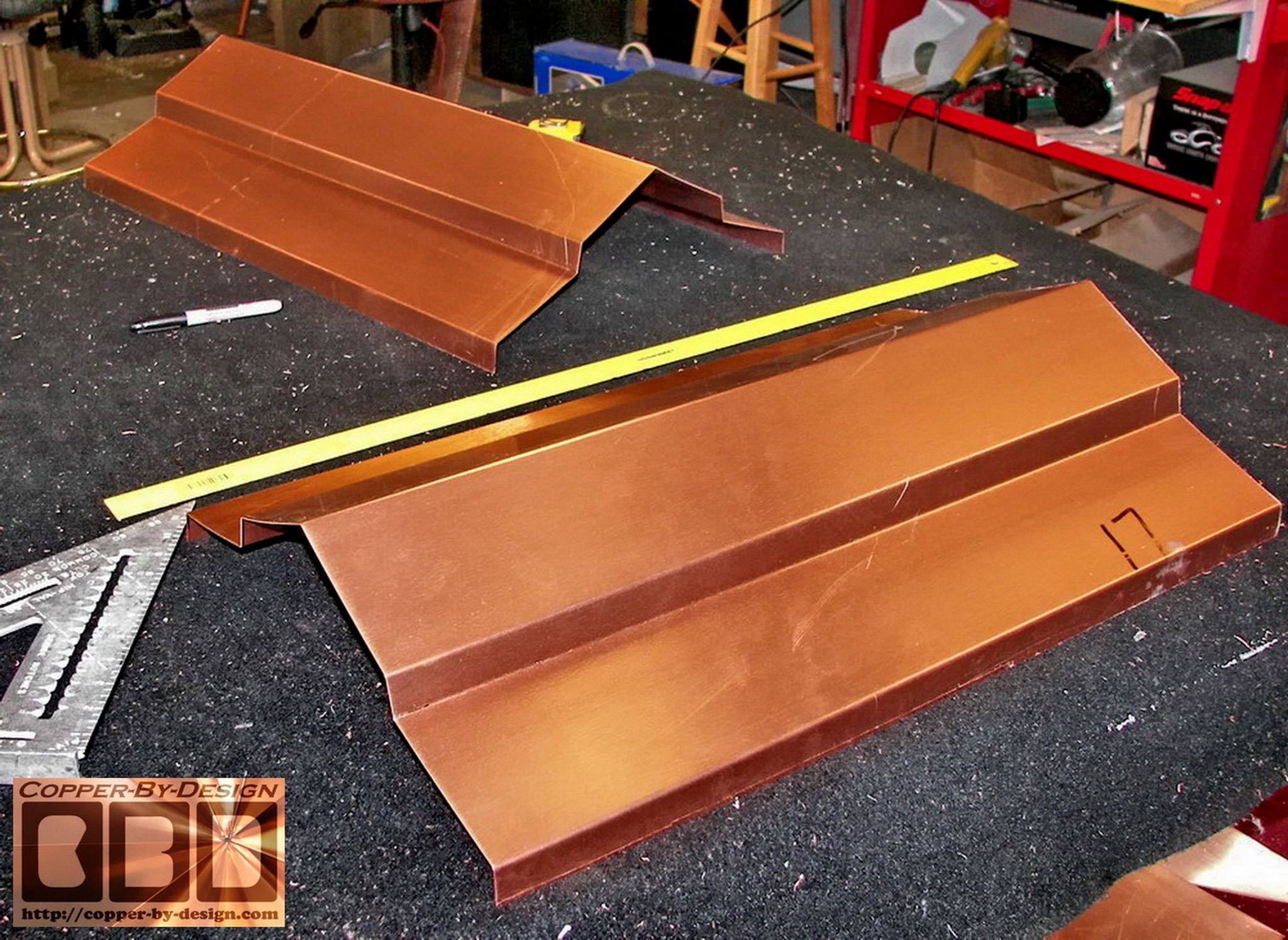
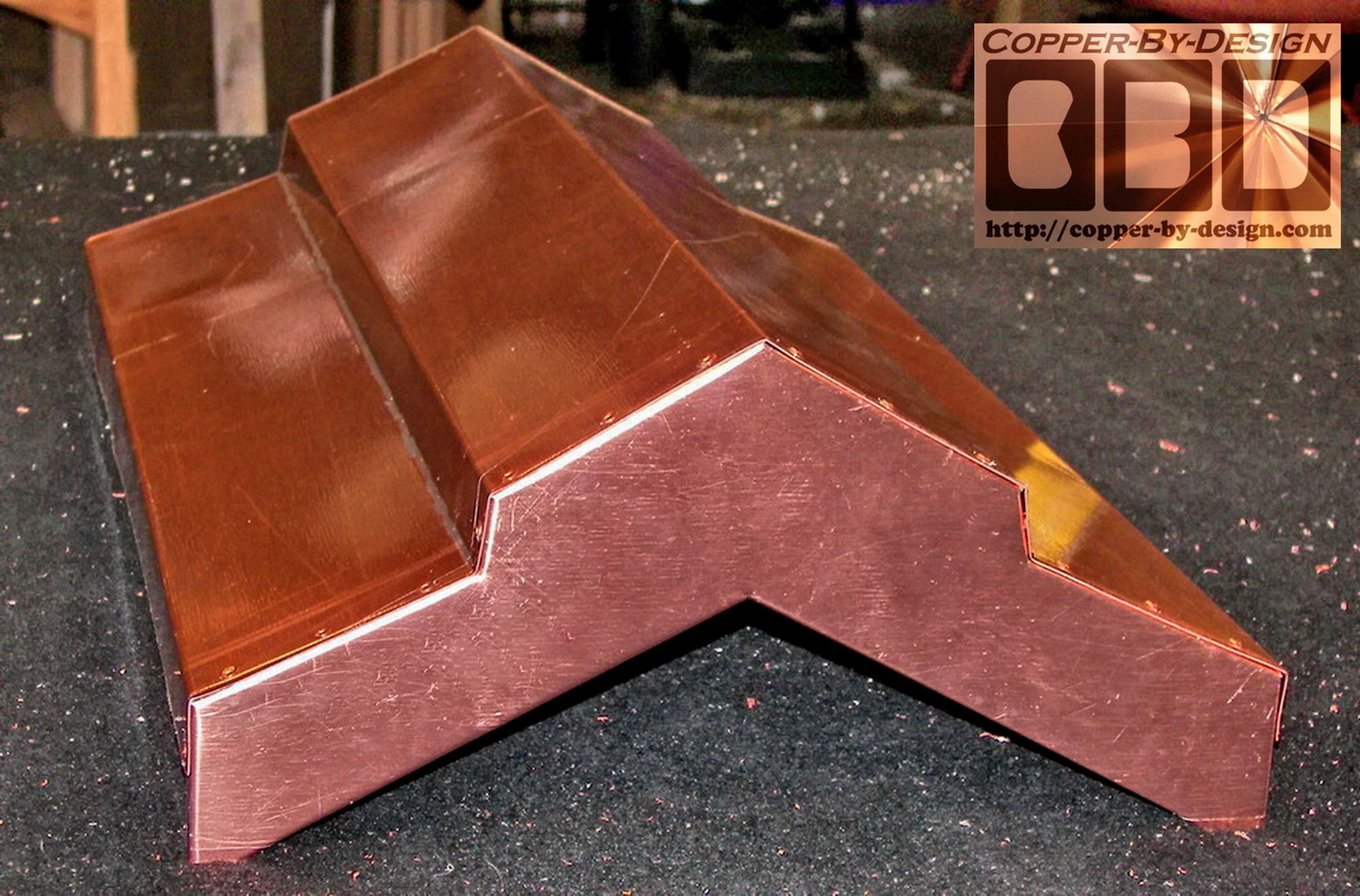
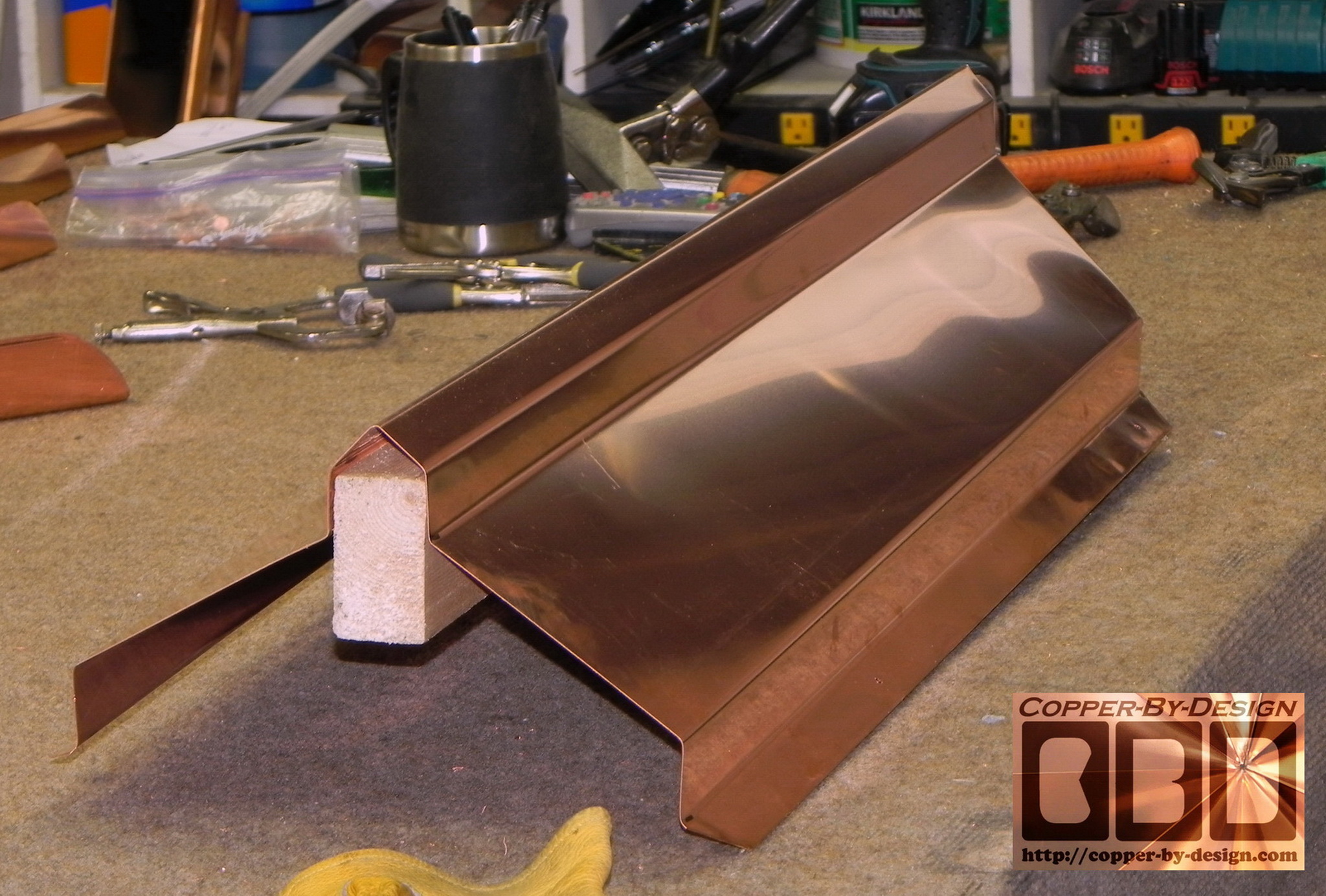
for several reasons: (a) A sheet metal ridge cap can seal the top ridge of your roof better than ordinary shingles, shakes, or tiles, and last longer against the harsh elements: sunlight, rain, corrosive oxygen, and high winds. (b) These ridge covers have enough copper surface to be more effective against moss growth further down the roof line than small zinc strips shown above. (c) If made w/several bends and a wood support framework inside it is strong enough to stand on without denting, as seen here to the right. (d) Copper will tarnishes to an unobtrusive flat brown within a few months of exposure, unlike galvanized steel. (e) If attached w/stainless steel screws and rubber washers every 2' on each side (which I supply with each order) these can be gently removed and re-used after a re-roofing decades later. (f) Uness you are adding a hidden ridge vent to this (well advised) this can be attached without disturbing or removal of your roof shingles. Making this a very quick easy installation. No messy caulk needed with a propper overlap of 6" or so, which allows for easy removal as well when the house needs reroofed.
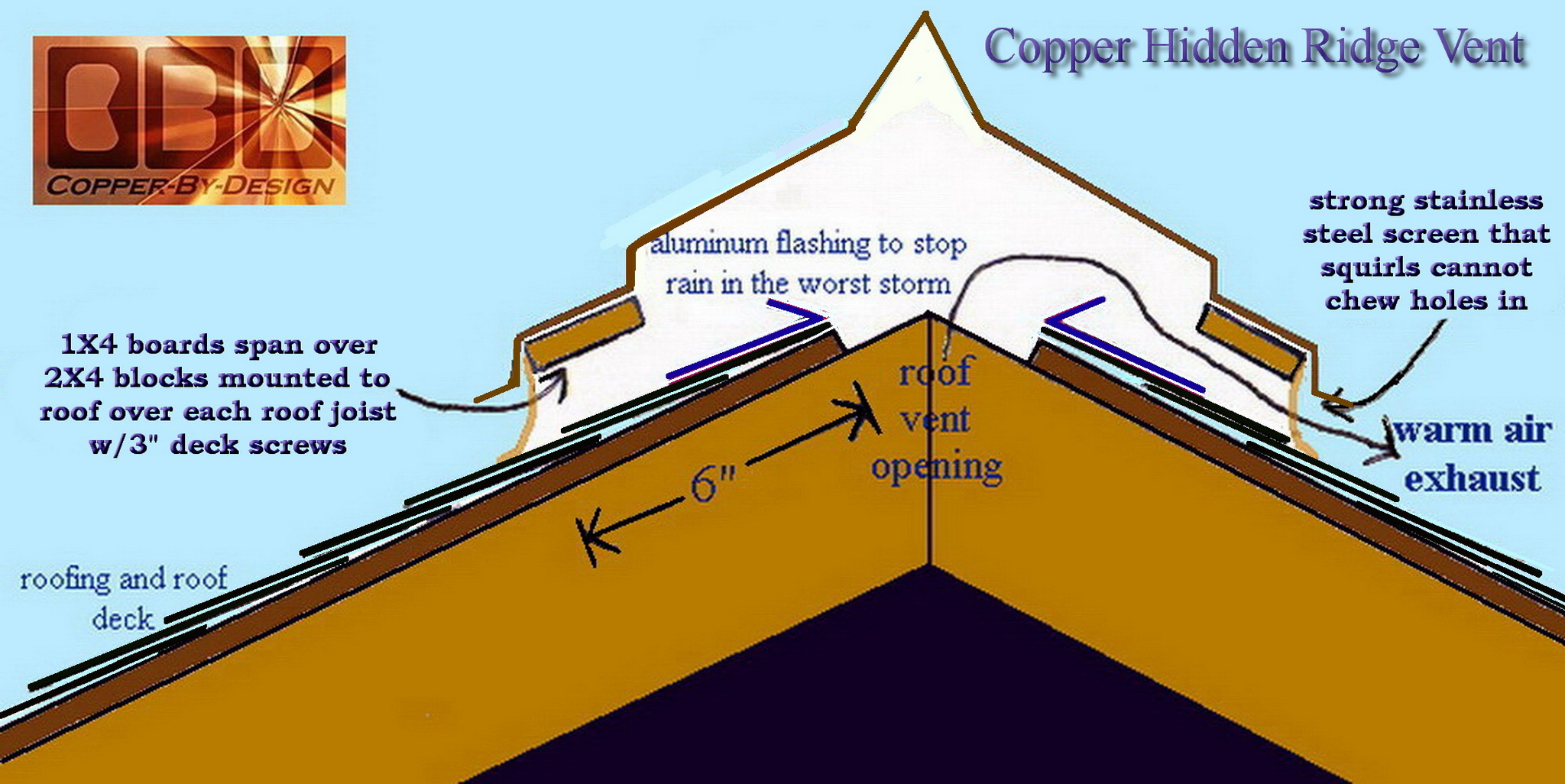
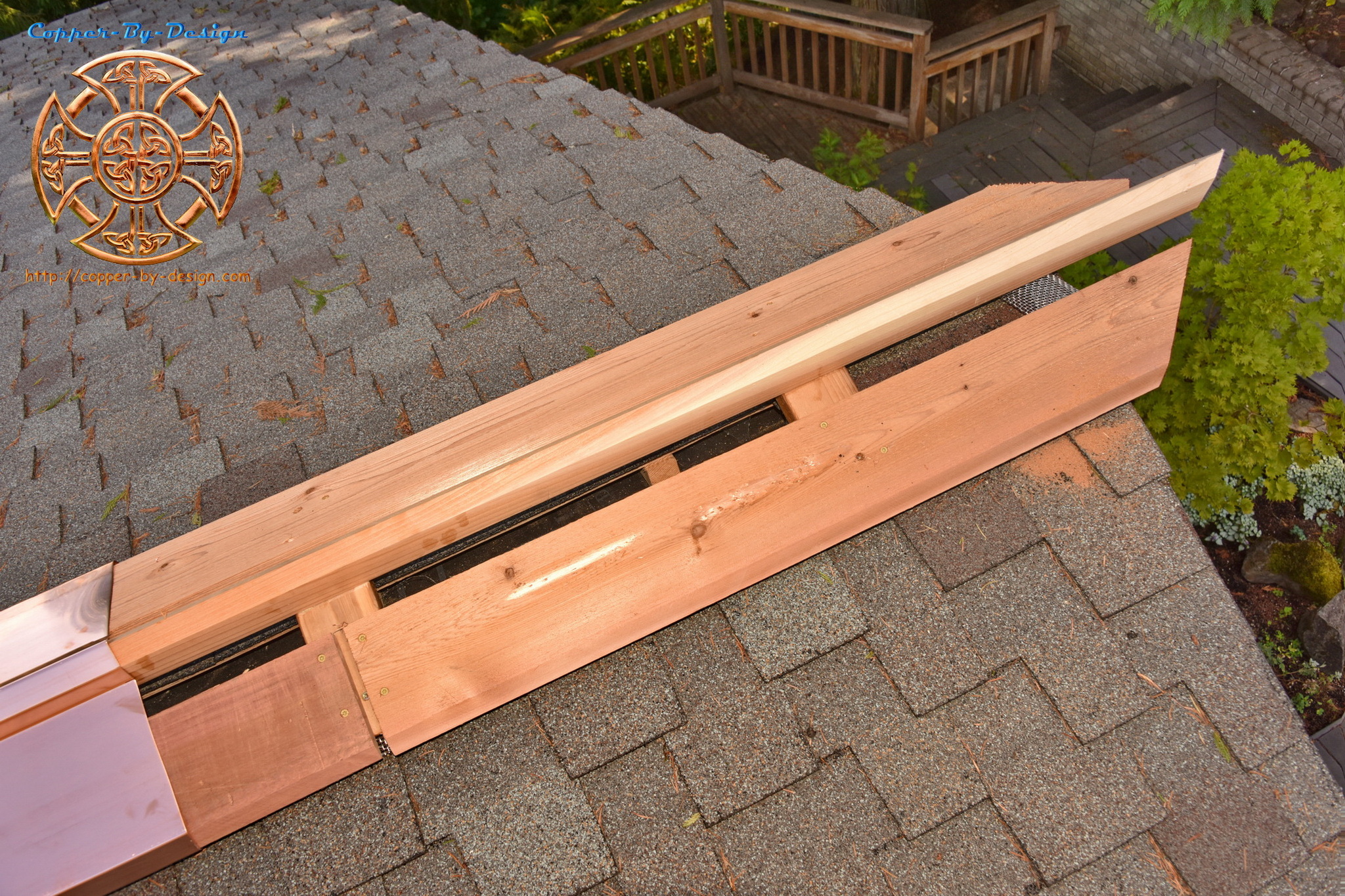
The 12' long sections should overlaps about 4" to 6", so this needs to be factored in when ordering a set of ridge caps. They should not be caulked or soldered together, or they will be very hard to remove to be reused after a reroofing. This also allows for the expansion and contraction that is likely to be different than your wood structure they are attached onto. It should come down at least 7" to 12" on each side. Besides adding a decorative touch the more bends it has the stronger and straighter it will appear after it is mounted. There are several different design profiles and roof angles to consider, but curves are not so easy to form and would add to the cost substantially. Hidden Ridge Venting: These copper ridge caps are also a better way to incorporate a hidden ridge vent as well. Far better than what is sold at the Roofing Suppliers. There are numerous different companies making a soft plastic ridge vent material, which is usually covered by fragile roofing shingles, but can be covered with copper just as well, but they make for a rather soft mount, compared to a wood framework shown here. Here is better screened roof vent design for you to consider:
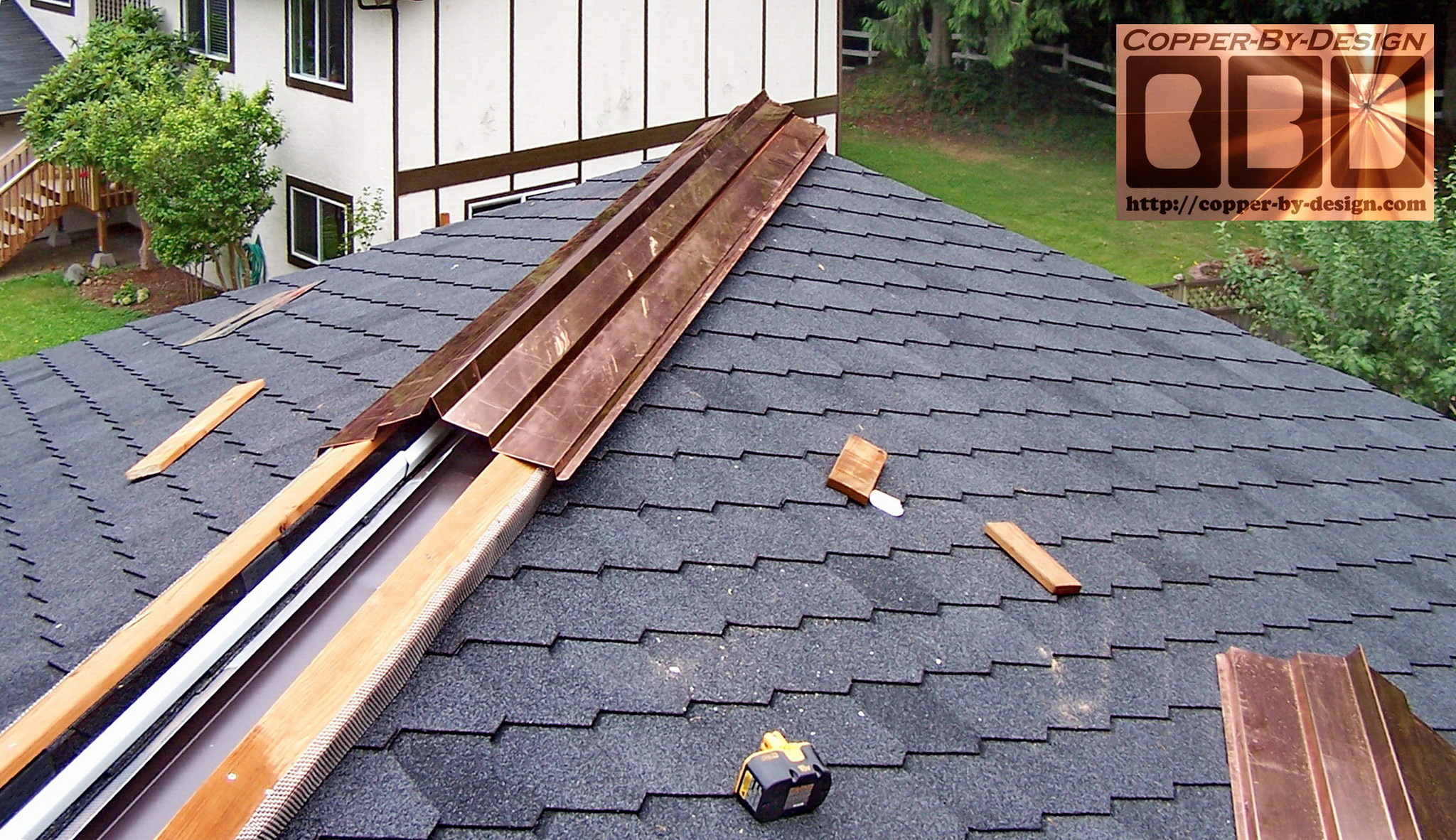
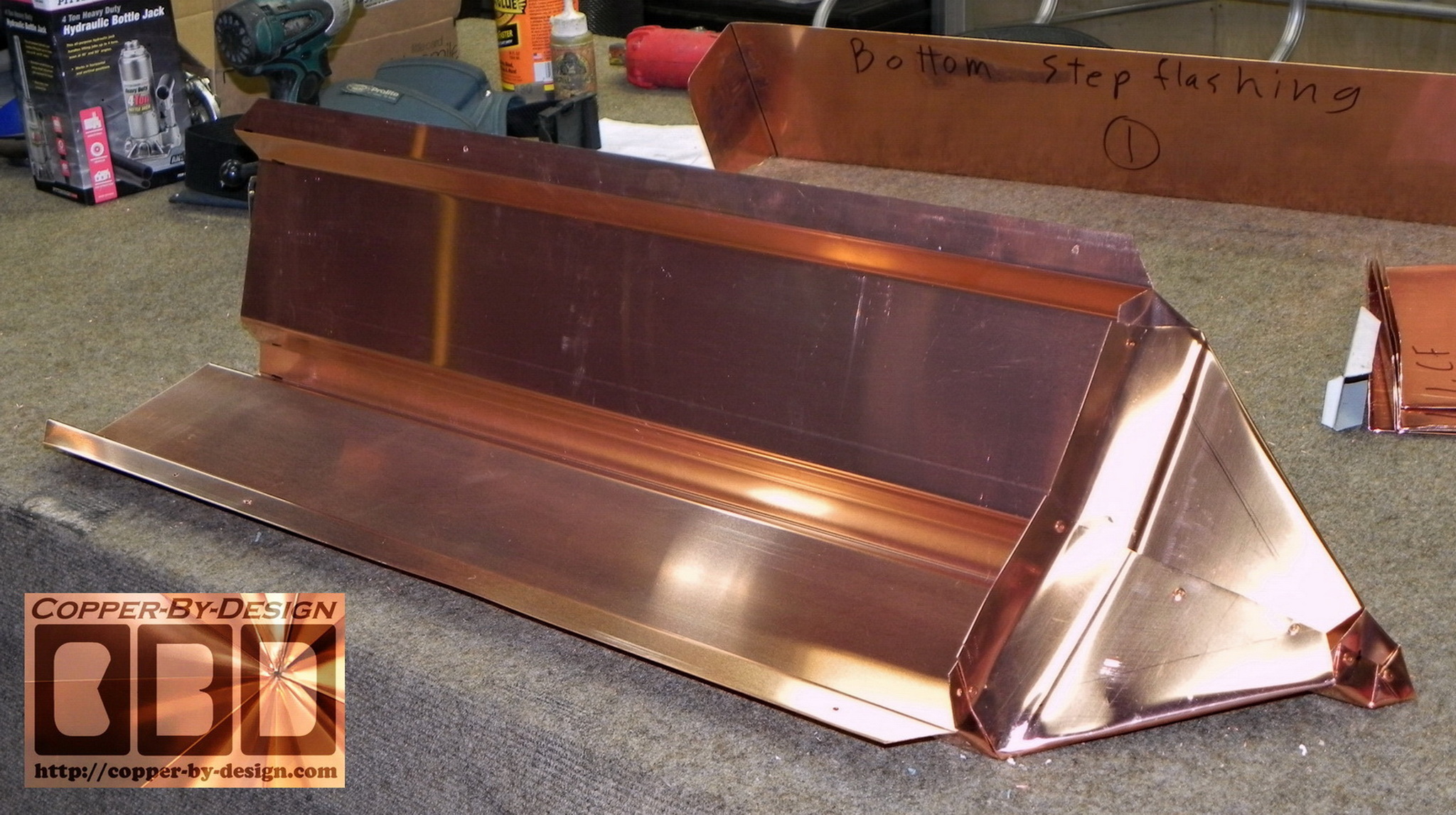
This shows a Client installed 24" W copper, SS screen, and aluminum flashing parts for a better hidden ridge vent when reroofing his house in Fall City, WA
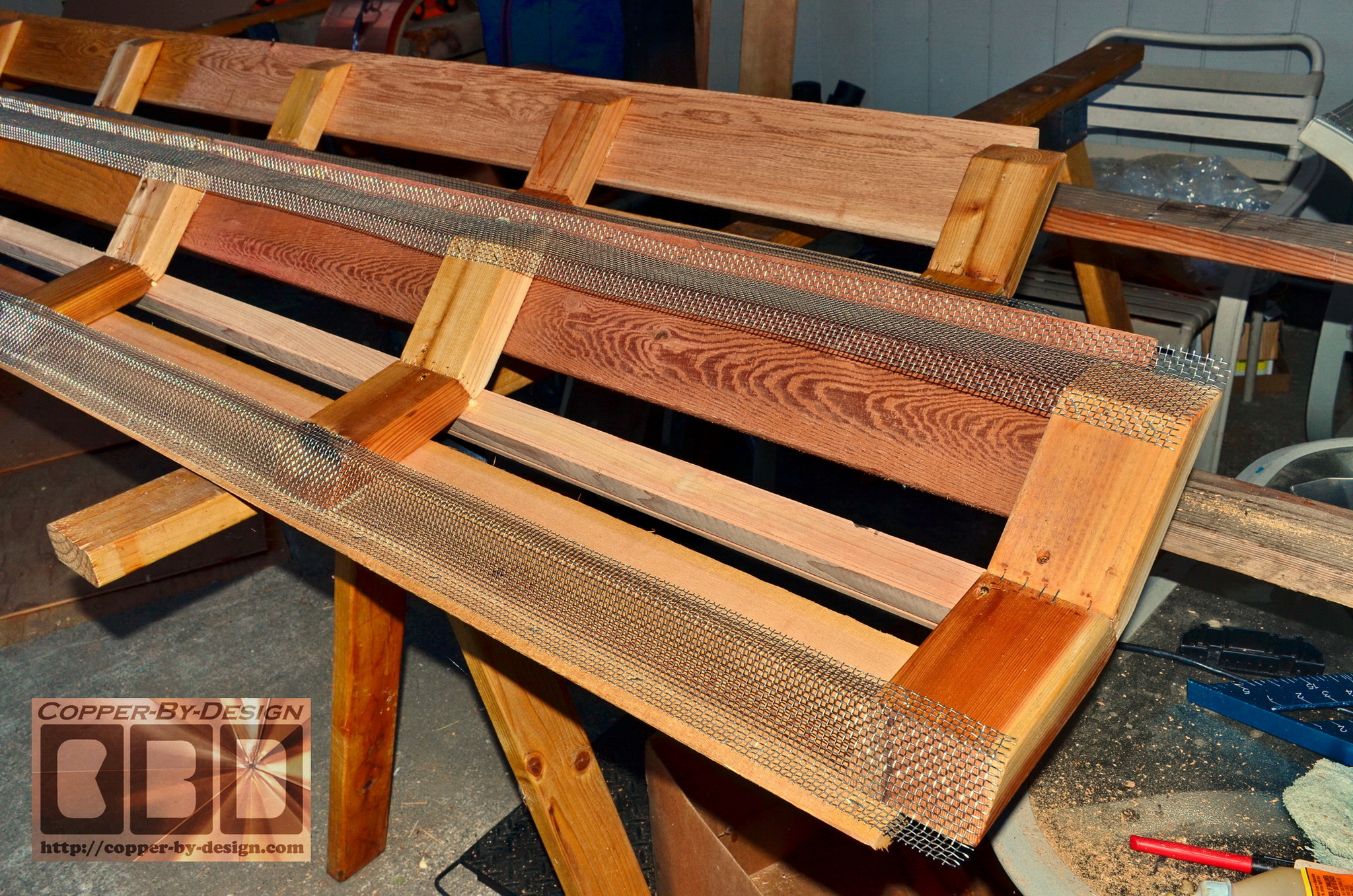
Below shows another hidden ridge vent system I recently came up with (10/14) that can be easily installed with just a fourth of the exposed fasteners needed, and no sharp edge metal exposed. This can be custom made to fit your roof angle. This was a 16' long section shown here made for a 5/12 pitch roof.
As to the cost for something like this: for the treated cedar wood, SS screen, and screws assembled runs $18 ln' assembled. For the 20oz copper cover at 2 sheets 12" wide runs $24 ln' plus the cost for a custom crate and truck freight charges. You are welcome to arange your own freight. This whole vent kit for a 40' long roof w/43.5 ln' for overlapping cover pieces that extend out past the roof edges w/a pair of custom end caps would cost $1,850. If that seems like a lot, think about how much you spent on accesories with your last new car buy?
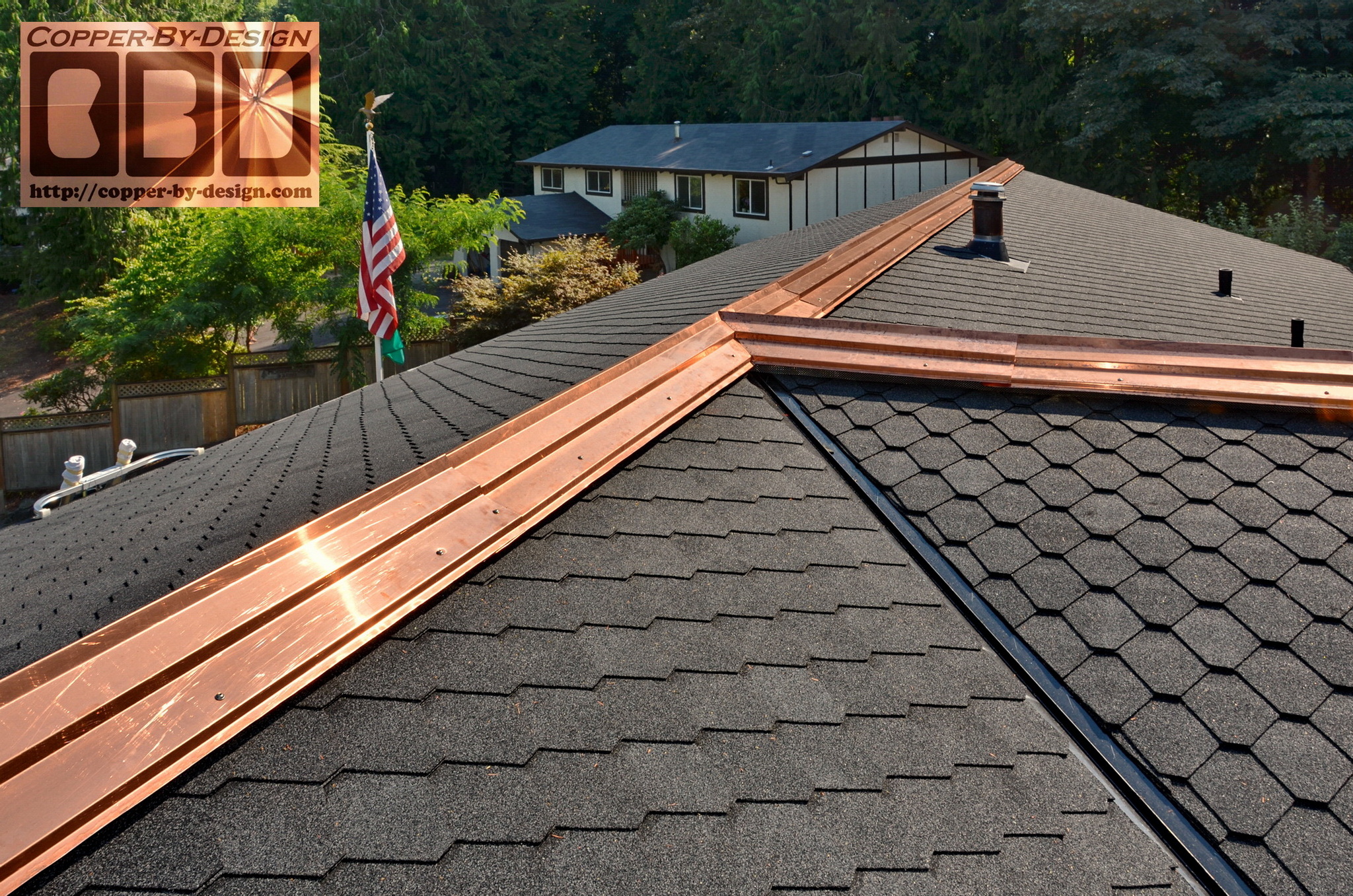
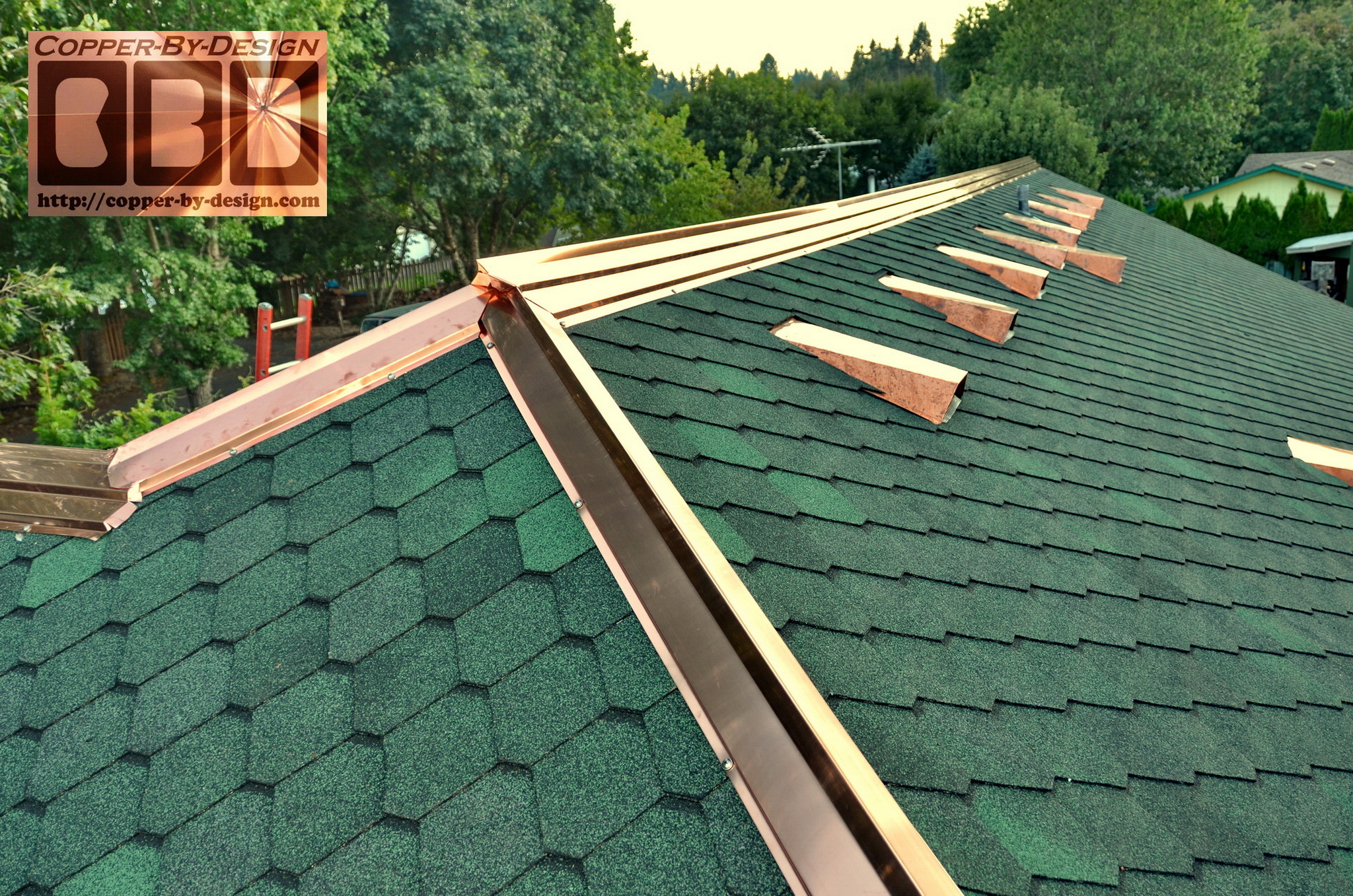
Here below is a copper ridge cap installed directly on the shingles; without the vent system. They had us make these low profile roof vents instead (shown to the right side).
Installation of our copper ridge cap w/individual copper roof vents to the right Contact us for more details and pricing.
The roof angles and style are so different for each house, so copper material is too expensive to form quantities in advance to have stock on hand. All custom copper ridge caps are made to your specifications and does not add to the cost. Feel free to offer suggestions of how you want this to look.
|
|
How To Safely Remove the Moss: |
|
Scraping by Hand: To remove only about 90% of the bulky moss; a garden
hoe can work to scrap it off, but it is really tedious since it is not
very wide. A better tool is to use a stiff-tooth rake and attach a scrapper on it, so not to use the teeth of the rake. A stiff 3" to 4"
tall strip of aluminum sheet-metal that is taller than the teeth of
the rake is attached on the inside edge of the rake. It is best to have
the bottom edge of the sheet metal bent at a 45 degree angle about 1"
up, in towards the handle along the bottom edge to scrape the moss downwards.
This bend can allow the scraper to be a few inches wider than the rake.
A few small holes are drilled through the sheet-metal to run a few nylon
ties through it to fasten it temporarily to the rake teeth. Clean-up:
Disclaimer: |
|
What if We Do Not Live There? |
|
If you are not local to the Portland Oregon Metro Area, this info should help you find the right Contractor to do this as I specified. Feel free to insist they read this web site and follow it to the letter. Or just print it out for them to read, and insist they read it there in front of you. If they balk at it or try to debate the validity of this web page, that should be very telling, and you should not hire them! The damages will be your loss, not theirs. You are not likely to get them to volunteer to repair those damages, and it will be very hard to prove their responsibility years later. |
|
If We Do Live Near You Can You Help? |
|
If you live in the Portland, Oregon Metro Area I will be happy to assist you with your needs, doing it the right way, but I am not licensed to apply that powder treatment, as it is considered a dangerous controlled substance and not covered by my Contractor's License. I would need to get the licensing and insurance to cover pesticide applicators, but you are free to apply that to your own roof if you are willing to take those risks. As to a cost example of the different options we can offer: roofing is calculated in 100 square foot sections, or a 10' x 10' area called a 'square of roofing'. These example prices below are based on a small low-slop roofed house (6/12 pitch or less) composite roof, with around 10 squares of roofing (or 1,000 square feet, which is different than the floor space in a house). A medium size house typically has around 25 squares of roofing. The cost varies due to the complexities and safety issues to access all the areas of your roof. Please go to our Contact web page and send us an e-mail telling us what you need or may want along with some digital photos of your house. (a) $400 to do a simple scrape and clean up; removing the bulk of the moss, which would be around 70 to 80%, including a gutter cleaning of course. (b) $1,200 to carefully scrape the moss off, removing around 95% of the moss build-up, along with clean up including the gutters. (c) $1,600 to do a simple scrape and clean up; removing around 70 to 80% of the debris, and install an 18” wide custom 20oz copper roof ridge cap 30' long. Keep in mind that this should be the last time this needs to be done, and the copper ridge cap is removable to be reused after a new roofing is installed as needed. We offer a 10% discount if you're also having us replace your gutters at that time. (d) $2,400 for a 95% scrape and install a 24” wide deluxe custom copper ridge cap 30' long. (e) $3,400 for a 95% scrape and install a 24” wide deluxe custom copper ridge cap 30' long with our hidden vent system under the ridge cap. |
| How does moss damage metal roofs? |
Moss and mildew on metal roofs is more a problem for anyone who needs to access your roof than the deterioration of the sheet-metal. They are very dangerous to access for servicing, since they mildew in short order and become very slick when damp! Even for a low slop roof. Wood shakes also moss-up like this and become very slick, but at least workers can wear special cleated boots. There are no special shoes made to walk safely on metal roofs. There are numerous problems with all types of metal roofs, as described on our Roofing web page. The moss will also hold moisture against the painted metal, causing the bacteria rage and buckle the paint off. Then resulting in quickly rusting through that thin steel sheet-metal. Once that steel begins to rust it is too late to just have it re-painted. The paint may stick to the rust, but the rust will flake off the rest of the steel. It will have to be carefully sanded down and primed, which is very costly and may cause a penetration to the steel sheet-metal surface. It is usually necessary to replace the roof at that point. Replacing only part of the metal roofing could be done, but would odd to see the oxidized paint of the older roof with the new replaced section. Also, most any roofing contractors will not even give you that kind of option. It would not be something they would be willing to do or warranty, even thought the CCB only requires a 1 year warranty on construction. There incentive is to sell you a complete new roofing job. |
| How does moss damage wood shakes |
Cedar wood roofing shingles are far more vulnerable to this kind of damage. Regular treatment of these 40 year cedar shake roofing is so costly that few home owners will have their roof treated as they should. Because of this it is rare to get a 20 year life span from these 40 year roofs. If they had gotten it treated as they should, in 40 years they would have spent more money than the cost of 2 new roofs, as well as the head-ache of finding competent workers to do this without causing more damage than the moss. That dry-rot of the expose wood may not be your primary concern, since the painted steel valley metal and other flashing, that is most always used, will rarely last more than 20 years anyway. It is just a shame that these owners were fooled into paying so much more for that short lived roof. Often more than the cost of a good 40 year composite roof with copper valleys and flashing. |
|
Clay & concrete roofing tiles |
|
Tile roofs are resistant to wear and tear of the elements, depending on what it is made of. There is a huge difference between the different roof tiles sold. Tiles tend to grow moss and mildew more than most any other roofing, clogging up the gutter each year. It looking quite unsightly. It can grow up under the overlapping shingle and crack them, causing substantial leaking that may be hard to spot and fix. Clay tiles with a glazing on them are much less porous and are much more resistant to damage of this kind, but rare to see on a house. The steel sheet-metal flashing and valley trays under the tiles are the biggest concern for this issue, and harder to access to clean out right. Note: It is highly recommended to check this and hire a contractor to replace all the flashing with aluminum, lead, copper, or stainless steel. We recommend copper flashing. A simple test can be preformed: magnet should not be able to stick to any of the rust free metals. If it is painted or zinc galvanized, it is not stainless steel. |
| Thatch roofing |
There is nothing much to say on this subject, since you would be hard pressed to find a thatch here in the States, but the damage potential should be pretty obvious. |
.
..
| Contractor's Liability Insurance Coverage Issue |
|
First off; a contractor's license does not allow for applying a moss killing agent chemical or powder. That has to be done by a pesticide contractor, although most pesticide contractors will not work on roofs. Most contractors do not carry the liability insurance and workman's comp that covers roofing work. This liability insurance is about 4 to 5 times as expensive as all the other types of construction work. This has nothing to do with the dangerous nature of roofing work. That is what Workman's Comp covers, so if a worker falls off and gets hurt, they will not need to sue the homeowner. The liability insurance is to protect you incase the contractor or his workers screw up the roofing project and damage your house. It seems that the roofers in this area have been doing such crappy work that they have accounted for 70 to 90% of all the claims processed by the CCB in Oregon. This is one of the worst statistics you are likely to run across. And that is even considering how most homeowner are not able to act on their complaint within the first year, and in many cases it is a moot point, since the CCB only requires a 1 year warranty by all licensed contractors. Few homeowners will really check into the contractor's background for reported complaints to check and see that they carry the proper insurance to cover roofing work. Take the time, or you will be sorry. Ask for a written warranty that is longer than one year. There should be no reason that a reputable contractor would not be proud to write you a 20-year installation warranty if they truly believe in their work. |
...
..
..
|
To recap, insist on: (a) No pressure washers to be used on your roof! Nothing stronger than a garden hose spraying downwards only. They need to use a hand scraper, or a wider hoe like scraper as described above, and carefully scrape the moss off without damaging your roofing. (b) To fully clean up their mess and haul that debris away (no illegal dumps). (c) A new custom copper roof ridge and hip caps are best to prevent further moss build-up. (d) A moss control powder can be applied to kill the moss and mildew that was missed as well as the moss spores left behind, but not to be used on roof with copper gutters. (e) Get some leaf protection for your gutters (if you have them) to help minimize the traffic on your roof in the future. |
|
We can help you with some of this if you live local to the Portland Oregon Metro Area. You can go to our contact info web page to find my cell phone #, but it is best to send me an informational e-mail first; going over your situation, digital photos, and your contact information with times to be reached, and we will send you a response e-mail within 24 hours to make arrangements to set up a time to go over your issues and costs. |
...
.
|
Other Helpful Roofing
Information For some valuable advice with regards to roofing and rain management issues check out our:
(a) Gutter Installation web pages for answers and solutions that could save you thousands of $ and a great deal of anguish. If you do find this information very helpful, feel free to send us a $ tip for the assistance we so freely have published on the web here for your benefit, like you might tip a waitress. Heck, send us a gift certificate for a candle lit dinner for two. <LOL> |
.
..
|
E-mail DMR Gutters at (503)
351-7082 |
..
..
..
|
Below is a
photo of our |
|
|
|
We were also a 1997 finalist for this same award. See our referral web page to see how we managed to be honored with this special award |
 Homepage |
 |
Company Profile |
|
Gutter Replacement |
|
No-clog Options |
|
Custom Fabrication |
|
Chimney Flashing |
|
Roofing & Skylights |
|
Business Equipment |